

Preschool Manipulatives: Types, Benefits & Learning Activities
Do preschool math manipulatives really work?
Yes. Preschool math manipulatives help children build early numeracy by allowing them to explore numbers through hands-on play instead of memorization alone. Research in early childhood education shows that physically moving, sorting, counting, and matching objects strengthens number recognition, one-to-one correspondence, pattern recognition, and early problem-solving while supporting fine motor development. For many preschoolers, these interactive experiences make abstract math concepts easier to understand than worksheets or flashcards by themselves.
Preschool math manipulatives: A complete guide to hands-on early learning
Preschool math manipulatives give young children a practical way to explore counting, number recognition, sorting, patterns, and simple arithmetic through play. Whether you're a parent creating learning opportunities at home or an educator building engaging classroom activities, the right hands-on materials encourage curiosity while supporting school readiness. This guide explains why manipulatives work, what features matter most, and how to choose age-appropriate resources that help children develop confidence in early math.
⏱ 8 min read
If your child quickly loses interest in worksheets or traditional number drills, you're not alone. Most preschoolers learn best when they can touch, move, compare, and experiment with real objects. Well-designed preschool manipulatives turn everyday play into meaningful learning experiences that build both confidence and foundational math skills.
What makes preschool math manipulatives more engaging than traditional learning methods? Let's explore why hands-on learning continues to be one of the most effective approaches for introducing early mathematics.
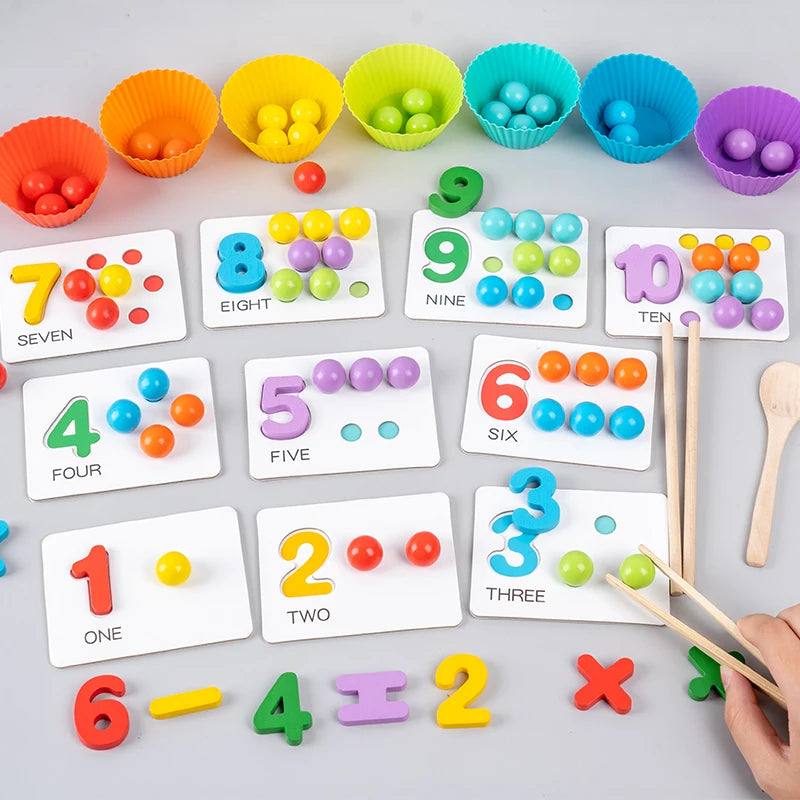
See preschool math manipulatives in action, including an early learning math manipulatives wooden set used for counting, sorting, matching, and other preschool math teaching activities.
Why hands-on math tools boost learning
Young children naturally learn through exploration. Instead of simply recognizing printed numbers, preschoolers develop a deeper understanding when they can touch, sort, stack, count, and rearrange physical objects. This active learning process helps connect abstract mathematical ideas to real-world experiences while keeping children engaged for longer periods.
Quality preschool math manipulatives also encourage conversation, experimentation, and independent discovery, making them valuable tools for both guided lessons and self-directed play.
- Strengthens number recognition through repeated hands-on practice.
- Develops fine motor coordination alongside early math skills.
- Makes concepts such as counting, addition, grouping, and patterns easier to visualize.
- Encourages critical thinking, problem-solving, and creative exploration.
- Supports school readiness by building confidence before kindergarten.
Explore more tools that support early development in Baby Growth & Learning .
Best types of preschool math manipulatives compared
Different preschool math manipulatives develop different skills. Rather than relying on a single learning tool, many teachers and parents combine several manipulatives to introduce counting, sorting, pattern recognition, spatial awareness, and simple arithmetic as children grow.
| Type | Best For | Advantages | Things to Consider |
|---|---|---|---|
| Counting blocks | Number recognition and one-to-one counting | Simple to understand, colorful, encourages hands-on practice | May require additional activities as skills advance |
| Abacus | Counting, grouping, and early addition | Provides strong visual support for place value and number relationships | Takes practice before children use it independently |
| Wooden Montessori-style sets | Counting, sorting, matching, patterns, and fine motor development | Versatile, durable, supports multiple developmental skills | Often costs more than basic learning tools |
| Flashcards | Reviewing number symbols and quick practice | Portable, inexpensive, easy to store | Most effective when paired with hands-on manipulatives rather than used alone |
Choosing a combination of manipulatives gives children opportunities to practice the same concept in different ways, helping strengthen understanding while keeping learning enjoyable.
For sensory-based learning support, check out Sensory Toys .
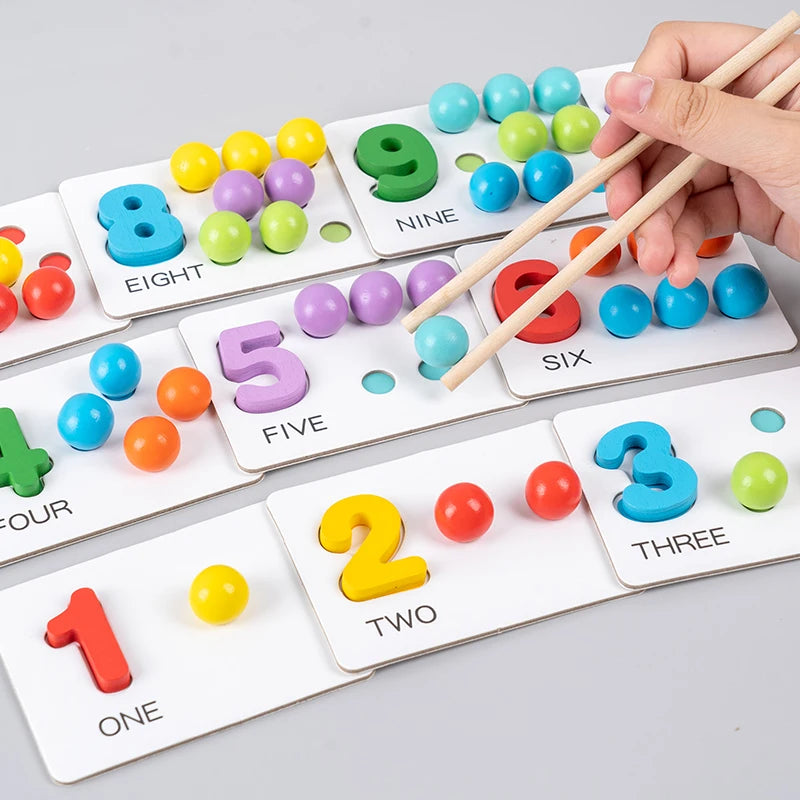
See preschool math manipulatives in action with hands-on counting, sorting, matching, and pattern-building activities designed for early learners.
How to choose the right preschool math teaching aids for home use
The best preschool math manipulatives match your child's developmental stage, learning goals, and interests. A thoughtfully chosen set should encourage repeated play while introducing increasingly challenging concepts as your child grows. Selecting versatile learning materials can also reduce the need to replace toys every few months.
Choose by age and developmental stage
- Ages 2–3: Introduce large counting objects, stacking pieces, and simple matching activities that build number awareness and hand-eye coordination.
- Ages 3–4: Add sorting, sequencing, color recognition, and pattern-building manipulatives to strengthen logical thinking.
- Ages 4–5: Incorporate activities for simple addition, subtraction, comparing quantities, and creating more complex patterns to prepare for kindergarten.
Focus on learning objectives
Rather than purchasing multiple single-purpose toys, look for manipulatives that support several early learning skills, including:
- Counting and number recognition
- Sorting, classifying, and matching
- Pattern recognition
- Fine motor development
- Problem-solving and independent exploration
Prioritize quality and safety
Choose preschool manipulatives made from durable, child-safe materials with smooth edges and finishes appropriate for young children. Larger pieces are generally easier for preschoolers to grasp and help reduce choking risks. Products that withstand daily classroom or home use also provide better long-term value.
Safety matters too—browse Health & Safety for child-friendly materials and safe play environments.
Frequently Asked Questions
What are manipulative toys for preschoolers?
Manipulative toys are hands-on learning materials that children can touch, move, sort, stack, match, or build with. They help preschoolers understand concepts through active exploration rather than memorization. Common examples include counting blocks, pattern tiles, beads, shape sorters, peg boards, and number puzzles.
Why are preschool manipulatives important for early learning?
Preschool manipulatives encourage children to learn by doing. They strengthen number sense, fine motor coordination, problem-solving, visual-spatial awareness, and language development while making learning more engaging and enjoyable. These experiences also help prepare children for kindergarten by building confidence with foundational concepts.
What are the best manipulatives for preschool math?
The best manipulatives depend on your child's age and learning goals. Counting cubes, linking cubes, abacuses, number puzzles, pattern blocks, counting bears, and multi-purpose wooden learning sets all support important early math skills. Choosing versatile manipulatives that combine counting, sorting, matching, and pattern activities offers the greatest long-term value.
Which math toys help preschoolers learn counting and numbers?
Math toys that encourage children to count physical objects are especially effective. Number boards, counting bears, stacking blocks, bead frames, and manipulatives with matching number cards help children practice one-to-one correspondence, recognize numerals, compare quantities, and develop early addition and subtraction skills.
What age should children start using preschool manipulatives?
Most children can begin using simple manipulatives around age 2 under adult supervision. As they approach ages 3 to 5, they can gradually progress to activities involving sorting, sequencing, patterns, measuring, and basic arithmetic.
How do teachers use manipulatives in preschool classrooms?
Teachers incorporate manipulatives into small-group lessons, learning centers, guided practice, and independent exploration. The same materials can support counting games, pattern creation, classification activities, collaborative problem-solving, and early STEM experiences while accommodating different learning styles.
Are wooden or plastic manipulatives better?
Both can be effective when they are well designed and age appropriate. High-quality wooden manipulatives are often chosen for their durability and tactile feel, while plastic manipulatives may be lighter, easier to sanitize, and available in a wider range of colors and shapes. Safety, quality, and educational value are more important than the material alone.
How should preschool manipulatives be stored and cleaned?
Store manipulatives in clearly labeled containers or bins so children can independently access and return materials. Clean plastic pieces with mild soap and water or child-safe disinfectants according to the manufacturer's instructions. Wooden manipulatives should typically be wiped with a damp cloth and dried thoroughly to help preserve their finish and extend their lifespan.
For more ideas on building a supportive learning environment, browse Baby Growth & Learning .
Pillar Article: Best preschool educational toys: Top picks & comparisons 2026
Other Related Articles:
- Number recognition games for preschoolers: Top games compared
- Benefits of hands on learning: What works better for kids?
- Advantages of Montessori education vs traditional preschool methods
- Educational toys for 4 year olds: Which works best?
Explore More:





