

Preschool Montessori Materials: What Kids Learn From Them
Do preschool Montessori materials really work?
Preschool Montessori materials can support early learning by giving children purposeful, hands-on ways to practice skills such as sorting, matching, sequencing, counting, language, coordination, and practical problem-solving. Instead of relying mainly on passive entertainment, Montessori-inspired materials are designed for active exploration, repetition, and increasing independence.
The strongest benefits come from using materials that match a child's developmental readiness and giving them time to explore without taking over. Preschool Montessori materials are not a guarantee of faster learning, but they can create a focused environment where children repeatedly practice meaningful skills and gradually become more confident doing tasks independently.
Preschool Montessori Materials: Features That Boost Learning
Preschool Montessori materials can turn everyday play into purposeful learning experiences. From educational Montessori toys age 3 plus to materials for early math, language, practical life, and sensory exploration, the best options give children something specific to do, notice, compare, build, or solve. A Montessori color sorting toy for toddlers, for example, can introduce color discrimination while also encouraging grasping, matching, classification, and concentration.
⏱ 7 min read
Are you overwhelmed by toys that promise learning but end up unused? Many parents face clutter, short attention spans, and uncertainty about which toys actually support development. Montessori materials offer a different approach: fewer distractions, clear purposes, repeated practice, and opportunities for children to participate actively.
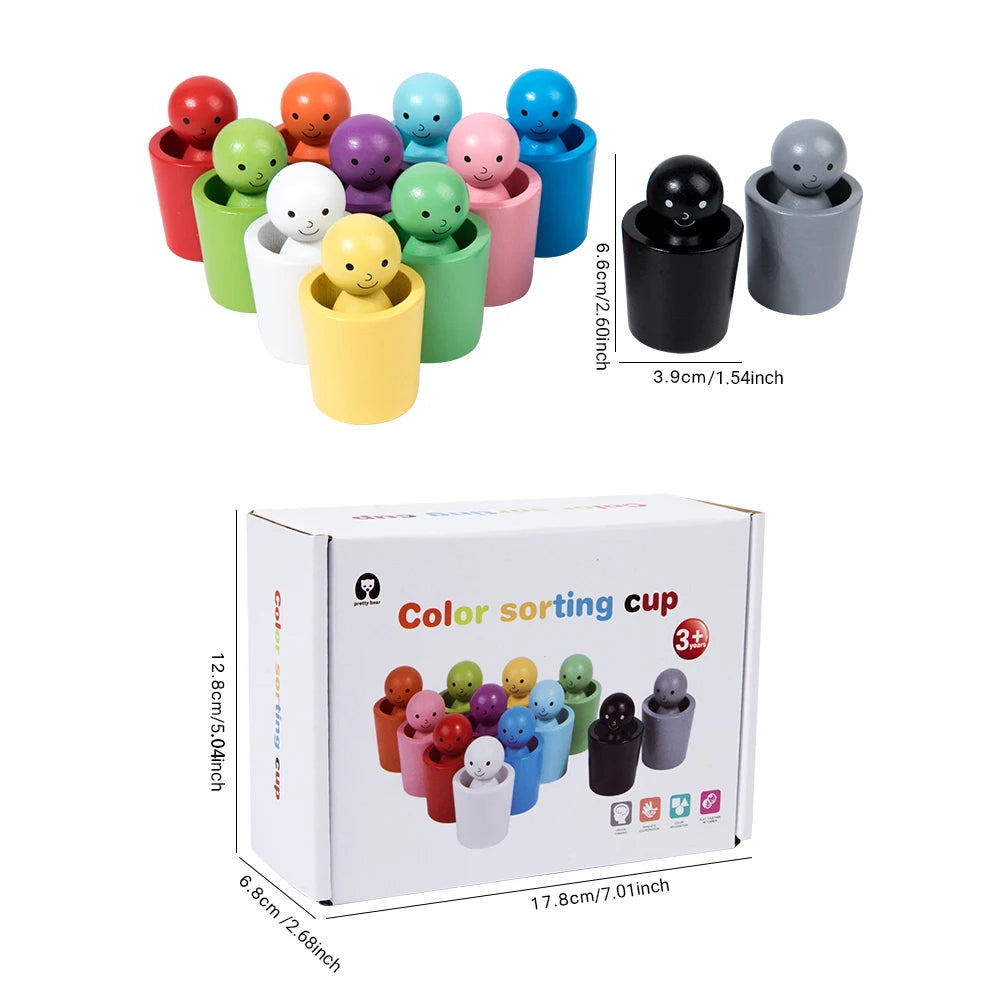
Best preschool montessori materials for early learning — See it in action
What Are Montessori Materials for Early Childhood?
Montessori materials are learning tools designed to help children develop specific skills through active, purposeful interaction. In a Montessori environment, materials are generally introduced according to a child's developmental stage and are used with clear objectives rather than simply being offered as entertainment.
For preschool children, Montessori materials commonly support five broad learning areas: Practical Life, Sensorial learning, Language, Mathematics, and Cultural Studies. A material may look simple, but its value comes from the skill it isolates and the opportunity it gives a child to repeat an activity independently.
Practical Life
Practical Life materials help children practice everyday actions such as pouring, transferring, scooping, buttoning, opening containers, cleaning, and organizing. These activities support coordination, sequencing, concentration, and growing independence.
Examples include child-sized pouring tools, dressing frames, tongs, trays, containers, brushes, and simple household-task setups.
Sensorial
Sensorial materials encourage children to notice and classify qualities such as color, shape, size, texture, sound, and weight. These activities help children refine observation and discrimination skills while building vocabulary for describing what they experience.
Color matching, shape matching, grading objects by size, and texture exploration are common examples of sensorial learning.
Language
Language materials give children opportunities to build vocabulary, identify sounds, match symbols, practice early writing movements, and connect spoken language with printed words. Activities can include picture cards, object-to-picture matching, sound games, movable letters, and tracing materials.
Mathematics
Montessori mathematics materials introduce abstract ideas through concrete objects. Children may begin with counting, quantity, one-to-one correspondence, number recognition, sorting, patterns, and simple operations before moving toward more abstract mathematical thinking.
Counting objects, number cards, bead materials, sorting activities, and quantity-matching games are examples of Montessori materials for preschool mathematics.
Cultural Studies
Cultural materials introduce children to geography, nature, science, communities, animals, plants, music, and different aspects of the world around them. Maps, globe activities, nature classification, animal models, and cultural picture cards can encourage observation and curiosity.
Why Preschool Montessori Materials Support Child Development
Preschool Montessori materials are built around active learning. Instead of expecting children to watch an adult demonstrate everything or press a button for an instant response, many materials ask them to manipulate objects, make decisions, notice differences, and repeat an activity.
- Independence: Children can practice completing manageable tasks with less adult intervention.
- Concentration: Repetition of a clear activity can encourage children to stay with one task for longer periods.
- Fine motor development: Picking up, placing, transferring, threading, pouring, and sorting objects exercise controlled hand movements.
- Problem-solving: Matching, sequencing, categorizing, and completing patterns give children opportunities to figure out what comes next.
- Confidence: Successfully completing an appropriately challenging activity can reinforce a child's sense of competence.
These benefits depend on the material, the child's readiness, and how the activity is presented. A material that is too easy may become boring, while one that is too difficult can create frustration. The goal is to provide an achievable challenge with room for repetition and progression.
Explore more tools in Baby Growth & Learning to support your child's development journey.
Key Features That Boost Learning Outcomes
Not every toy labeled “educational” functions like a Montessori material. The most useful preschool Montessori materials generally have a clear learning purpose and encourage children to interact with the material rather than simply watch it perform.
1. Hands-On Interaction Builds Active Learning
Children learn by manipulating objects, testing relationships, comparing results, and repeating actions. Educational Montessori toys age 3 plus can engage several skills at once when a child picks up, sorts, matches, counts, or arranges physical pieces.
Hands-on learning also makes an abstract concept more concrete. A child can physically separate objects by color before being expected to describe the idea of classification verbally.
2. Self-Correcting Design Encourages Independence
Some Montessori materials are designed so that an error becomes noticeable to the child. For example, a piece may not fit correctly, a sequence may look incomplete, or a matching activity may leave one item without a pair.
This type of feedback gives children an opportunity to notice and correct mistakes themselves. Adults can support the process without immediately supplying the answer.
3. Simple Design Reduces Unnecessary Distractions
Many Montessori materials use simple shapes, limited visual elements, and a defined purpose. This does not mean every Montessori-inspired toy must look minimalist, but a focused design can make it easier for a child to understand what the activity is asking them to do.
4. Repetition Builds Familiarity and Skill
Children often need repeated practice before a new skill becomes comfortable. Montessori learning materials for 3 year olds can be especially useful when an activity is interesting enough to invite repetition without constantly changing the rules.
5. Intrinsic Motivation Matters More Than Constant Rewards
Many Montessori activities allow the satisfaction of completing a task to become part of the motivation. Instead of requiring lights, sounds, scores, or prizes after every action, the material itself provides a reason to continue exploring.
6. One Clear Challenge Makes Progress Easier to See
A material with a specific purpose can make it easier for adults to observe what a child is practicing. Sorting, matching, transferring, sequencing, and counting each provide visible opportunities to notice progress.
Best Montessori Materials for Preschoolers by Age
The best Montessori materials for preschoolers should follow developmental readiness rather than a rigid birthday-based schedule. Two children of the same age may have different interests, coordination, language abilities, and levels of independence. Use age ranges as a starting point, then adjust the difficulty based on what your child can comfortably do.
Age 3
At around age 3, children can benefit from materials that involve matching, sorting, transferring, simple sequencing, practical tasks, and basic counting.
- Color and shape matching activities
- Simple sorting trays
- Large-piece puzzles
- Tong or spoon transfer activities
- Pouring and practical-life setups
- Counting objects and quantity matching
- Simple threading or lacing activities
Readiness signs: Your child can follow a short sequence of actions, handle larger pieces safely, and show interest in repeating an activity.
Age 4
Four-year-olds may be ready for materials that add more steps, finer distinctions, and early academic concepts.
- More complex classification activities
- Pattern-building materials
- Number and quantity matching
- Letter and sound activities
- More detailed puzzles
- Practical-life tasks with several steps
- Sorting by multiple characteristics
Readiness signs: Your child can sustain attention through several steps and is beginning to recognize patterns, categories, symbols, or quantities.
Age 5
Five-year-olds can often work with more advanced Montessori materials that connect concrete experiences to early abstract concepts.
- More advanced counting and number activities
- Early addition and subtraction materials
- Movable alphabet and word-building activities
- Sequencing and classification challenges
- Geography and cultural materials
- More detailed practical-life projects
Readiness signs: Your child can follow multi-step directions, compare several objects or ideas, and work independently for increasingly longer periods.
How Color Sorting Toys Fit the Montessori Approach
A Montessori color sorting toy for toddlers can be a useful sensorial learning material because it gives children a concrete way to compare, match, classify, and organize colors.
- Color discrimination: Children practice noticing similarities and differences between colors.
- Classification: Sorting pieces into groups introduces an early logical concept.
- Fine motor practice: Picking up and placing pieces requires controlled hand movements.
- Visual attention: Children must look carefully at pieces before deciding where they belong.
- Early mathematical thinking: Grouping and comparing objects are foundations for later classification and mathematical reasoning.
For a simple activity, begin with two contrasting colors and ask the child to match each piece to its corresponding group. As the child becomes comfortable, add more colors or ask them to sort without prompting. You can then extend the activity by counting each group, comparing which group has more pieces, or creating a simple color pattern.
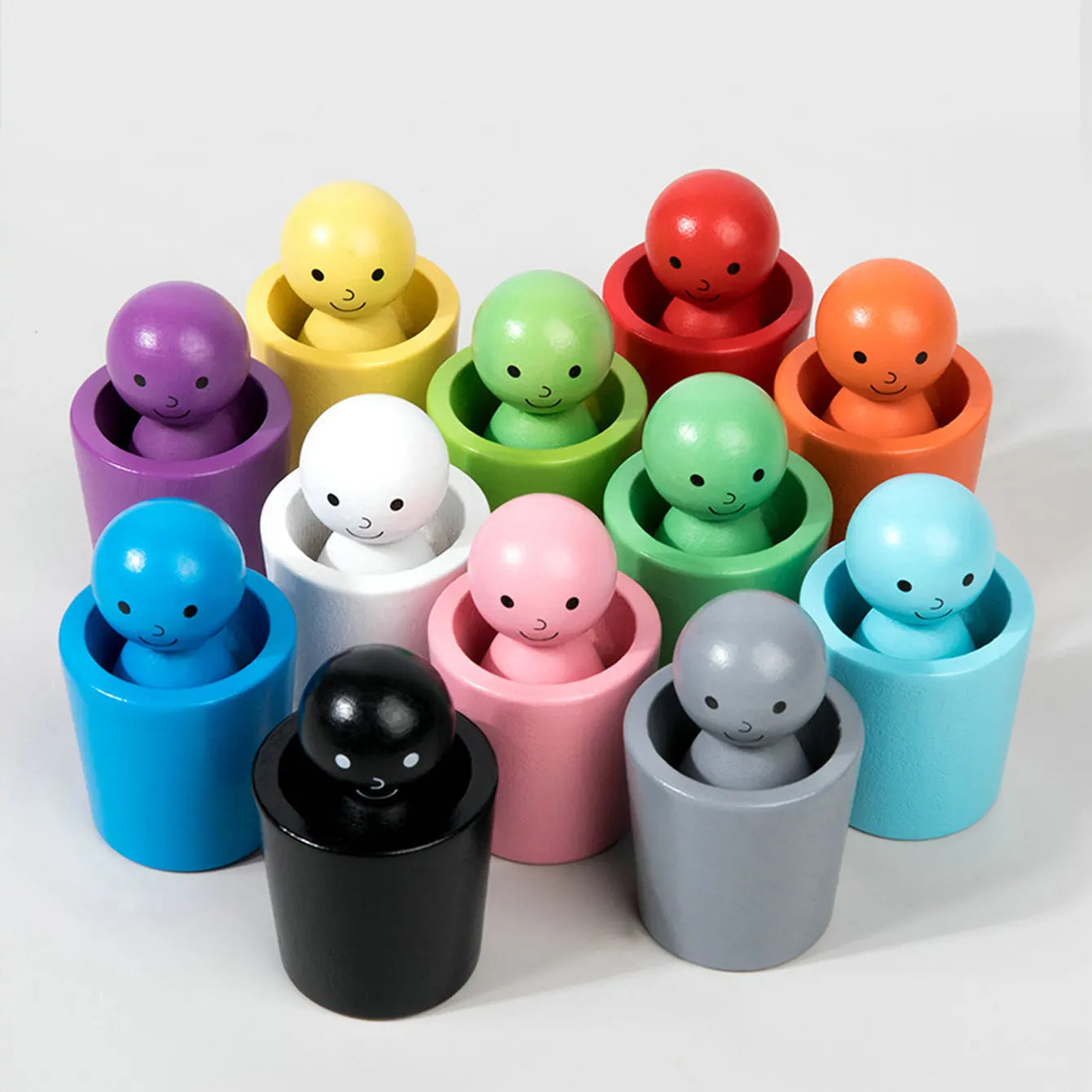
Montessori color sorting toy for toddlers improving focus — See it in action
Pair these activities with sensory experiences from Sensory Toys for additional hands-on learning opportunities.
For a dedicated option, the Montessori color sorting toy for toddlers can be used for matching, sorting, and simple color-based extensions.
Montessori Activities for Preschool Age Using Common Materials
You do not need a complete Montessori classroom to introduce Montessori-inspired activities at home. Everyday household materials can provide meaningful practice when the activity has a clear purpose and is appropriate for the child's age.
- Sorting: Give your child a small collection of large, safe objects and ask them to group items by one visible characteristic, such as color or shape.
- Transfer work: Use appropriately sized containers and tools for moving objects from one container to another while supervised.
- Practical-life tasks: Invite your child to help with simple age-appropriate tasks such as wiping a table, organizing belongings, or placing items in a designated location.
- Counting: Count everyday objects together, then match quantities to simple number cards.
- Pattern building: Create a short repeating pattern with safe objects and ask your child to continue it.
- Matching: Pair identical or related objects, pictures, shapes, or colors.
- Nature classification: During a supervised outdoor activity, compare leaves, rocks, or other appropriate natural objects by observable characteristics.
Start with one simple instruction. Once your child understands the activity, step back and allow independent practice. When the activity becomes easy, add one new challenge rather than changing everything at once.
Montessori Materials vs Traditional Toys
Montessori materials and traditional toys are not mutually exclusive. A child can benefit from open-ended building, pretend play, books, puzzles, art supplies, outdoor play, and Montessori-inspired activities. The main difference is often the intended learning experience and how the child interacts with the object.
| Feature | Montessori Materials | Traditional Toys |
|---|---|---|
| Learning style | Purposeful, hands-on exploration | Can range from passive entertainment to active play |
| Primary focus | Often isolates a specific skill or concept | May combine entertainment, imagination, and multiple skills |
| Feedback | May provide built-in or visible feedback | May rely on adult guidance or game rules |
| Repetition | Designed to support repeated practice | Depends on the individual toy |
| Independence | Often encourages children to complete tasks independently | Varies by toy and activity |
| Open-ended play | Some materials are focused; others allow extensions | Many imaginative and construction toys are highly open-ended |
This comparison does not mean Montessori materials are automatically better than every traditional toy. A well-designed traditional toy can support creativity, social interaction, motor skills, or problem-solving. The better question is whether a particular toy gives your child a meaningful opportunity to practice the skill you want to support.
How to Choose the Right Montessori Materials
Choosing the best Montessori materials for preschoolers is less about buying the largest collection and more about selecting a small number of purposeful, developmentally appropriate activities.
- Match the material to the child's readiness. Look for activities your child can attempt successfully with reasonable effort.
- Choose a clear learning purpose. Decide whether you want to support sorting, coordination, counting, language, practical life, sensory discrimination, or another specific skill.
- Prioritize hands-on interaction. Choose materials that require children to manipulate, compare, arrange, build, or solve.
- Check size and construction. Materials should be appropriate for the child's age, durable enough for repeated use, and free from accessible small parts when those could present a choking risk.
- Look for manageable complexity. A material with a simple starting activity can often be extended as the child develops.
- Consider independence. Ask whether your child can understand and complete at least part of the activity without constant adult assistance.
- Avoid buying for labels alone. “Montessori” on packaging does not automatically mean a product follows Montessori principles or suits your child's needs.
Feeling unsure? Start with a focused activity such as a Montessori color sorting toy for toddlers and observe how your child interacts with it before adding more materials.
Home Versus Classroom Montessori Materials
Montessori materials for preschool can look different in a classroom and at home because the environments have different goals, budgets, and amounts of available space. A classroom may need a broad collection covering several curriculum areas, while a home setup can focus on a few skills that match the child's current interests and needs.
| Consideration | Home | Classroom |
|---|---|---|
| Number of materials | Small, carefully selected collection | Broader range across learning areas |
| Storage | Simple shelf, tray, or accessible cabinet | Dedicated shelves and defined work areas |
| Budget | Prioritize versatile materials | May require a wider investment |
| Adult role | Parent or caregiver introduces and observes | Teacher typically gives structured presentations |
| Activity rotation | Rotate materials as interest changes | Materials are organized according to classroom routines |
Budget-friendly priority: Start with a few versatile activities rather than trying to recreate an entire classroom. A sorting activity, practical-life task, puzzle, counting material, and age-appropriate language activity can provide a useful foundation.
Storage tip: Keep only a manageable number of activities available at one time. Store extras separately and rotate them when your child's interest changes. This can make the available materials feel more purposeful without adding more clutter.
Real Results Parents and Teachers Notice
The benefits of Montessori materials are best evaluated through everyday behavior rather than promises of instant academic improvement. With regular opportunities to practice, parents and teachers may notice that children become more comfortable completing familiar tasks, sustaining attention, organizing objects, and correcting simple mistakes.
- Greater willingness to repeat a challenging activity
- More independence with age-appropriate tasks
- Improved hand control during sorting, transferring, or placing activities
- Stronger ability to notice differences and similarities
- More confidence when completing familiar activities
- Better understanding of basic concepts through repeated practice
Progress will not look identical for every child. A child may spend several days exploring one material before showing a new skill, while another may move through the same activity quickly. The most useful measure is whether the material provides an appropriate challenge and whether the child is gradually becoming more capable or independent.
Parent Review: “My 3-year-old used to jump between toys. Now, with a color sorting toy, she stays focused for 20 minutes straight!”
Combine these materials with routines from Baby Care Tips & Advice to create a structured learning environment at home.
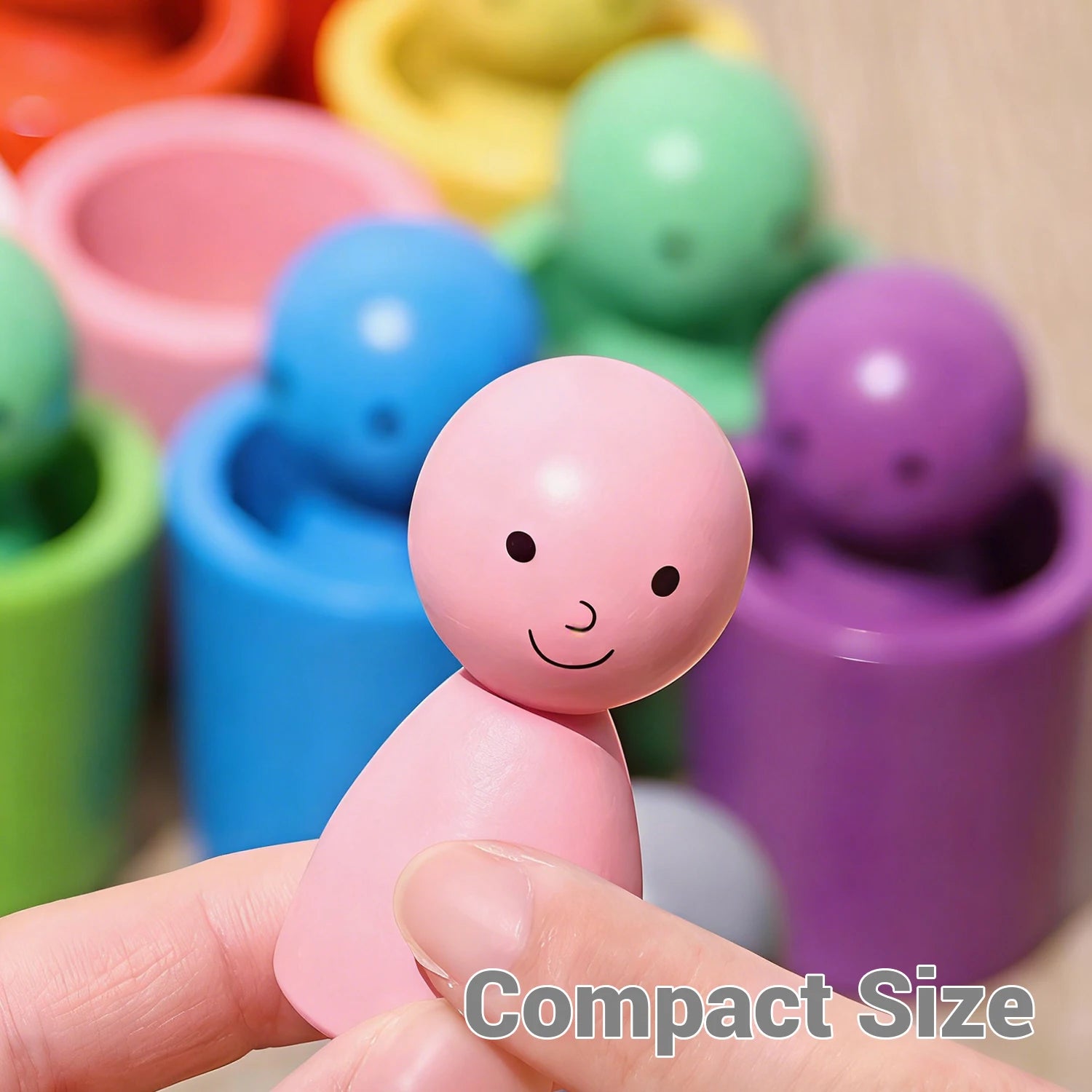
Educational Montessori toys age 3 plus for purposeful learning — See it in action
FAQs
What are Montessori materials for early childhood?
Montessori materials are hands-on learning tools designed to help children practice specific developmental skills through purposeful activity. Common categories include Practical Life, Sensorial, Language, Mathematics, and Cultural Studies.
What are the best Montessori materials for preschoolers?
The best Montessori materials for preschoolers depend on the child's age, interests, and readiness. Useful options include sorting and matching materials, practical-life tools, puzzles, counting materials, language activities, sensorial materials, and age-appropriate pattern or sequencing activities.
Which Montessori learning materials are suitable for 3 year olds?
Montessori learning materials for 3 year olds can include simple color and shape sorting, matching, large-piece puzzles, transferring activities, practical-life tasks, basic counting materials, and other activities that build coordination and independence. Choose materials that your child can manipulate safely and understand with minimal instruction.
How do Montessori materials benefit preschool children?
Montessori materials can support independence, concentration, fine motor coordination, classification, early mathematical thinking, problem-solving, and confidence. Their value comes from purposeful hands-on practice, repetition, and opportunities for children to participate actively.
Can parents use Montessori materials at home?
Yes. Parents can use Montessori materials for preschool at home without creating a full classroom. Start with a small selection of activities, demonstrate them simply, provide an accessible workspace, and allow your child time to practice independently. Everyday household tasks can also become Montessori-inspired practical-life activities when they are safe and age appropriate.
How are Montessori materials different from traditional educational toys?
Montessori materials typically have a defined learning purpose, encourage hands-on manipulation, and often support repetition and independent discovery. Traditional educational toys can also be valuable, but their learning approach varies widely. Rather than choosing based only on the label, consider what the child actually does with the material and which skills it supports.
Pillar Article: Toys That Improve Fine Motor Skills: Key Benefits Explained
Other Related Articles:
Explore More:





