

Math Interactive Tools That Make Hard Concepts Click
What are the best water play ideas for preschoolers?
Some of the best water play ideas for preschoolers include pouring and transferring stations, floating-and-sinking experiments, water painting, sponge challenges, measuring games, and imaginative water-world play. These water play activities for preschoolers can take 5–20 minutes to prepare and support fine motor control, sensory exploration, early math and science concepts, language, creativity, and problem-solving.
| Activity | Best for | Setup time | Learning outcome |
|---|---|---|---|
| Pouring station | Ages 3–5 | 5 minutes | Hand-eye coordination and control |
| Floating and sinking | Ages 3–5 | 5–10 minutes | Prediction and early science |
| Water measuring | Ages 4–5 | 5 minutes | Counting, volume, and comparison |
| Water painting | Ages 3–5 | 2 minutes | Creativity and mark-making |
| Outdoor water transfer | Ages 3–5 | 5 minutes | Gross motor skills and coordination |
For a quick indoor activity, choose pouring, water painting, or a small sensory bin. For outdoor play, add larger containers, scoops, sponges, and water channels. The best setup depends less on having special equipment and more on giving children simple materials they can explore, compare, predict, and use in different ways.
Water Play Ideas for Preschoolers: Simple Setups for Skill-Building Fun
⏱ 8 min read — Water play gives preschoolers a hands-on way to explore how things move, feel, change, and interact. With a shallow container, a few household tools, and a simple learning prompt, parents and educators can create engaging water play for preschoolers without complicated preparation. From sensory discovery and fine motor practice to early STEM, math, language, and imaginative play, these activities turn an ordinary water station into a flexible learning environment.
water play ideas for preschoolers that boost engagement and learning — See it in action
Why Water Play Supports Preschool Development
Water play in preschool is more than a way to keep children occupied. It creates an open-ended environment where children can touch, pour, squeeze, compare, predict, describe, and experiment. Because the same materials can be used in many different ways, preschool water play naturally supports several areas of development at once.
Sensory Development
Water provides immediate sensory feedback. Children can notice temperature, texture, movement, weight, splashing, and changes in water level. Scooping, pouring, stirring, and transferring also give children opportunities to explore cause and effect through direct experience.
Fine Motor Skills
Small water tools encourage controlled hand movements. Pouring from one container to another requires wrist control, while squeezing a sponge or using a small scoop requires coordinated finger and hand movements. These hands-on experiences can complement other fine motor activities for preschoolers.
Early STEM and Math
Water play creates natural opportunities for early science and math. Children can predict which objects will float, observe what happens when containers overflow, compare which cup holds more, count scoops, and experiment with different pathways for moving water. This makes water play a practical form of early STEM exploration rather than a separate lesson.
Language and Social Skills
Water play with preschoolers also creates reasons to talk and cooperate. Adults can introduce words such as full , empty , heavy , light , float , sink , more , and less . When children play together, they can share containers, negotiate turns, describe discoveries, and create pretend scenarios.
For additional hands-on ideas, explore Baby Growth & Learning and connect water activities with other screen-free learning opportunities.
Water Play Activities for Preschoolers by Learning Goal
The easiest way to choose water play activities for preschoolers is to start with the skill you want to encourage. You do not need to turn every activity into a formal lesson. A simple question or challenge can be enough to extend learning while still allowing children to explore independently.
Sensory Water Play
Try: a shallow sensory bin with cups, sponges, scoops, and floating objects.
Materials: shallow container, water, cups, sponge, scoop, and a few large water-safe objects.
Setup: 5 minutes.
Builds: sensory awareness, coordination, attention, and descriptive language.
Extension: Ask, “What feels different when the sponge is wet?” or “What happens when you squeeze it?” Let the child demonstrate rather than requiring a correct answer.
STEM Water Experiments
Try: a floating-and-sinking investigation.
Materials: a basin of water and several large, safe household objects with noticeably different properties.
Setup: 5–10 minutes.
Builds: prediction, observation, classification, and early scientific reasoning.
Extension: Before placing each object in the water, ask, “What do you think will happen?” Afterward, compare the prediction with the result.
Math Water Activities
Try: a measuring and filling station.
Materials: measuring cups, small containers, spoons, and a shallow tub.
Setup: 5 minutes.
Builds: counting, comparison, volume awareness, sequencing, and early measurement concepts.
Extension: Invite your child to count how many small cups fill a larger container or compare which container holds more.
Literacy and Imaginative Play
Try: a pretend car wash, boat harbor, animal bath, or water-world story.
Materials: cups, containers, large water-safe toys, and simple props.
Setup: 5 minutes.
Builds: vocabulary, storytelling, sequencing, social communication, and creativity.
Extension: Add a simple problem to solve: “The boat needs to get across the water. How could we make a path?”
Fine Motor Water Challenges
Try: sponge transfers, scoop-and-pour races, or moving water between containers.
Materials: sponges, small cups, scoops, bowls, and a shallow basin.
Setup: 5 minutes.
Builds: grip control, bilateral coordination, precision, and hand-eye coordination.
Extension: Change the container size or tool to make the task slightly easier or more challenging.
Water Play With Storytelling Toys
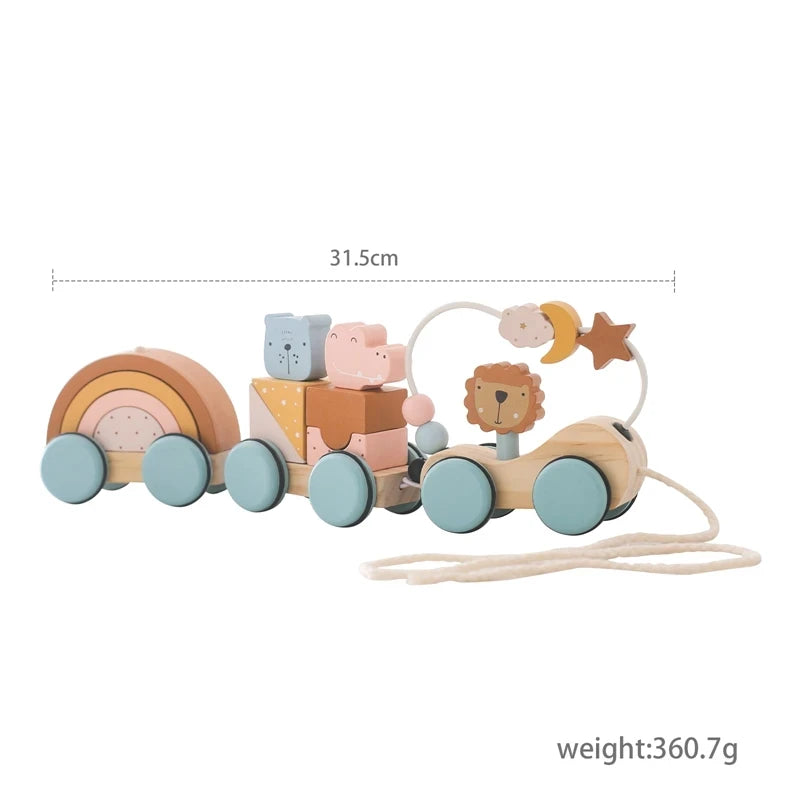
Water can also become part of pretend play. For example, a wooden train toy for kids can inspire a story about passengers traveling to a harbor or crossing a pretend waterway. Keep the toy itself in a suitable dry area unless its manufacturer specifically states that it is designed for water use.
Indoor and Outdoor Water Play Ideas
Water play ideas for preschool can work in many environments. The main difference is the amount of space available and how easily you can manage spills and cleanup.
Indoor Rainy-Day Activities
- Set up a small basin inside a bathtub or on a waterproof floor covering.
- Use cups and sponges for quiet pouring and transferring.
- Try water painting on a washable surface.
- Create a small floating-and-sinking investigation with a shallow container.
- Use a towel underneath the activity area to simplify cleanup.
Outdoor Summer Activities
- Create a larger pouring station with buckets, pitchers, and cups.
- Use sponges to transfer water between containers.
- Make simple water channels with containers or suitable outdoor materials.
- Try sidewalk water painting with a large brush.
- Explore how water moves downhill or through different pathways.
Seasonal Adaptations
Water play does not need to disappear when the weather changes. In cooler weather, use short indoor activities with warm-to-the-touch room-temperature water and dry the play area promptly. In hot weather, outdoor play can provide more space, but children still need close supervision, suitable shade, and protection from excessive heat.
How to Set Up Safe Water Play
Safe water play activities for young children require active adult supervision. Even a shallow amount of water can present a drowning risk, so an adult should remain within arm’s reach and focused on the child rather than relying on a phone, monitor, or nearby supervision.
Materials Checklist
- Shallow, stable container
- Unbreakable cups and containers
- Large, age-appropriate scoops and sponges
- Non-slip surface or towel underneath the station
- Clean water
- Large water-safe objects without accessible small parts
Adult Supervision
Stay close throughout the activity and avoid leaving a child alone around water. Check the setup before play begins and remove objects that could create a choking or other safety hazard.
Hygiene and Cleanup
Use clean containers and fresh water for each session. Empty standing water after play, rinse reusable materials, and allow them to dry thoroughly. Clean spills promptly to reduce slipping hazards.
Accessibility Tips
Adjust the height and size of the activity so the child can participate comfortably. For children who have difficulty gripping, offer larger-handled tools or lightweight containers. Children who prefer less sensory input can begin with a dry tool or a small amount of water before gradually increasing the sensory experience.
Low-Prep and Budget-Friendly Water Play Activities
You do not need a dedicated water table or expensive sensory equipment. Many ideas for water play in early years can be created with everyday household materials.
Household Materials
- Plastic cups and bowls
- Measuring cups
- Clean kitchen sponges
- Large spoons and scoops
- Empty, clean food-safe containers
- Washable paintbrushes for water painting
Reusable Supplies
Choose durable containers that can be washed and reused rather than creating a new setup for every activity. A small collection of cups, bowls, sponges, and scoops can support dozens of variations.
5-Minute Setups
For a fast activity, place a shallow container on a stable surface, add a small amount of water, and provide two or three tools. Give your child one open-ended prompt such as “Can you move the water from this bowl to that cup?” Then allow exploration to lead the activity.
Step-by-Step: How to Set Up a Water Play Station at Home
Choose a Location
- Select a stable area where small spills can be cleaned easily, such as a bathtub, waterproof floor, or suitable outdoor space.
- Place a towel or non-slip surface underneath the activity where appropriate.
Prepare Materials
- Use a shallow, stable container.
- Add two or three cups, a scoop, and a sponge.
- Start with a simple setup rather than filling the area with toys.
Guide the Activity
- Introduce one simple challenge, such as pouring, transferring, squeezing, or predicting whether an object will float.
- Use open-ended questions such as “What do you notice?” or “What could you try next?”
- Allow your child to repeat successful actions and experiment with different approaches.
Extend the Learning
- Add counting when filling or transferring.
- Introduce comparison words such as more, less, full, and empty.
- Encourage your child to describe what happened.
- Connect the activity to a pretend story when appropriate.
Short sessions are often enough. Rather than enforcing a fixed duration, watch your child's engagement and stop when they become tired, frustrated, or ready for another activity.
screen free activities for young children that improve focus — See it in action
Troubleshooting Common Water Play Challenges
Short Attention Spans
If a child loses interest quickly, reduce the number of materials and introduce one new challenge. A simple change, such as replacing a cup with a sponge or asking the child to find which container holds more, can refresh a familiar activity.
Mess Management
Keep water play contained by using a shallow bin, limiting the amount of water, and placing towels underneath the setup. Give children clear boundaries about where water can be poured. Finish with a simple cleanup routine so putting materials away becomes part of the activity.
Mixed-Age Groups
Offer different levels of the same activity. A younger child might scoop and pour while an older preschooler counts scoops, compares volumes, or predicts what will happen. This keeps children working with the same materials while adjusting the cognitive challenge.
For more screen-free options, explore Screen free activities: Easy Step-by-Step Ways to Keep Kids Engaged at Home .
FAQs
What are the benefits of water play for preschoolers?
Water play can support sensory exploration, fine motor coordination, early science and math concepts, language development, problem-solving, creativity, and social interaction. Its open-ended nature also gives preschoolers opportunities to repeat actions and experiment at their own pace.
What are the best indoor water play ideas for preschool?
Good indoor options include small pouring stations, water painting, sponge transfers, and floating-and-sinking investigations. Use a shallow container in a controlled area and keep the amount of water manageable for easy cleanup.
How can water play teach math and science?
Children can count scoops, compare full and empty containers, estimate which cup holds more, predict whether objects will float or sink, and observe how water moves. These simple experiences introduce measurement, comparison, prediction, observation, and cause-and-effect reasoning.
What materials do I need for preschool water play?
You can start with a shallow container, cups, bowls, a scoop, and a sponge. Measuring cups, washable brushes, and large water-safe objects can add new learning possibilities without requiring specialized equipment.
How do I make water play safe for young children?
Use a shallow, stable setup and age-appropriate materials, remove potential hazards, manage slippery surfaces, and provide close, active adult supervision throughout the activity. Empty and clean the play container after each session.
How long should a preschool water play session last?
There is no single ideal duration. A short 10–20 minute activity can provide plenty of learning, while an engaged child may continue longer with appropriate supervision. Follow the child's attention and energy rather than requiring a fixed amount of time.
What materials are best for preschool water play?
Lightweight, unbreakable cups, shallow containers, sponges, scoops, measuring cups, and other age-appropriate water-safe tools work well. A small selection is usually more useful than providing too many objects at once.
Can water play support STEM learning?
Yes. Preschoolers can explore floating and sinking, water flow, volume, measurement, prediction, classification, and cause and effect through simple hands-on water activities for preschoolers. Adults can extend the learning with questions without turning play into a formal worksheet-style lesson.
What are safe water play activities for young children?
Safe options include supervised pouring, sponge squeezing, water painting, simple measuring, and floating-and-sinking activities using suitable materials. Always provide close adult supervision around water and adapt materials to the child's age and abilities.
How do I keep water play educational?
Choose one learning goal, provide a few flexible materials, and add simple prompts such as “What do you notice?” “Which has more?” or “What do you think will happen?” Let the child explore, repeat, and solve problems rather than directing every step.
How often should preschoolers have water play?
Water play can be offered regularly as part of a varied play routine. Several short sessions each week can provide repeated opportunities to practice skills, but there is no need to follow a rigid schedule. Rotate activities and materials based on the child's interests.
Pillar Article: Screen free activities: Easy Step-by-Step Ways to Keep Kids Engaged at Home
Other Related Articles:
- Preschool ideas for 2 year olds: Step-by-Step Home Learning Guide
- Role play ideas for preschoolers: Easy Steps to Create Learning Games
- Fine motor skill activities: Simple Daily Exercises to Build Strength
Explore More:





