

Does the Tuya Zigbee climate sensor really deliver precise readings?
The Tuya Zigbee climate sensor delivers dependable temperature and humidity monitoring when installed correctly and paired with a compatible Zigbee hub. Its low-power Zigbee communication, stable reporting, and quality sensing components help reduce unnecessary automation triggers, making it a practical choice for smart homes, nurseries, bedrooms, offices, and indoor climate monitoring.
Best Zigbee Temperature and Humidity Sensors for Smart Homes (2026 Guide)
Accurate indoor climate monitoring is essential for reliable smart home automation. Whether you're managing a nursery, optimizing HVAC performance, protecting indoor plants, or improving household comfort, choosing the right Zigbee temperature and humidity sensor makes a noticeable difference. This guide explains how Zigbee climate sensors work, what affects their real-world accuracy, and where the Tuya Zigbee climate sensor fits alongside other popular Zigbee ecosystems.
⏱ 7 min read
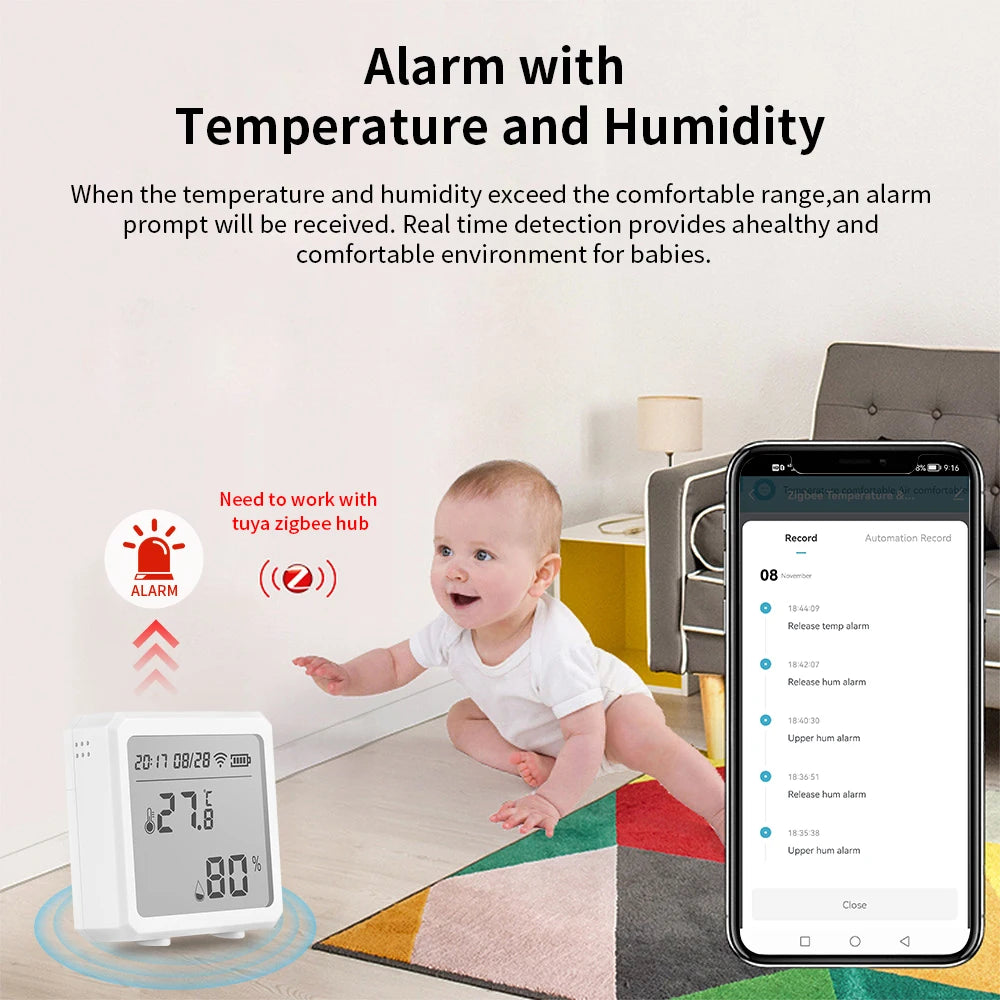
Tuya Zigbee climate sensor — See it in action.
Why precision matters for indoor comfort and long-term energy savings
Even small measurement differences can affect how well a smart home responds. A temperature reading that is consistently high or low may cause heating or cooling systems to cycle unnecessarily, while inaccurate humidity readings can lead to overuse of humidifiers or dehumidifiers. Choosing a reliable Zigbee temperature and humidity sensor helps maintain more stable indoor conditions, supports efficient automation, and reduces unnecessary energy consumption.
Accurate environmental monitoring is particularly valuable in nurseries, bedrooms, home offices, storage areas, and plant rooms where temperature and humidity remain important throughout the day. Consistent sensor data also improves the reliability of routines that control fans, HVAC systems, air purifiers, and smart plugs.
Does the Tuya Zigbee climate sensor deliver reliable results?
For most smart home users, yes. The Tuya Zigbee climate sensor provides dependable temperature and humidity measurements when positioned correctly and connected to a stable Zigbee mesh network. Like any environmental sensor, overall accuracy depends on placement, airflow, calibration tolerance, and reporting intervals rather than specifications alone.
How Zigbee temperature and humidity sensors work
A Zigbee environmental sensor combines digital sensing hardware with low-power wireless communication. Instead of connecting directly through Wi-Fi, it sends temperature and humidity data to a compatible Zigbee hub, which can then trigger automations, display historical trends, or integrate with broader smart home platforms.
Zigbee network communication and smart hub connection
Zigbee creates a local mesh network where compatible powered devices help relay signals between sensors and the hub. This architecture improves coverage throughout the home while consuming far less battery power than most Wi-Fi sensors. Because many automations run locally, responses can remain fast even if internet connectivity is temporarily unavailable.
How sensors measure temperature and humidity data
Modern Zigbee indoor climate sensors use digital sensing elements that continually sample the surrounding air. Firmware filters brief fluctuations caused by opening doors, direct airflow, or temporary heat sources, allowing automation rules to respond to meaningful environmental changes rather than isolated spikes.
- Calibrated sensing components: High-quality sensor chips minimize manufacturing variation and improve long-term consistency.
- Optimized reporting intervals: Devices balance responsiveness with battery life by transmitting significant changes instead of every minor fluctuation.
- Zigbee mesh reliability: Local communication reduces delays that can occur with cloud-dependent wireless devices.
Key features to check before buying a Zigbee climate sensor
1. Temperature and humidity accuracy
Look beyond advertised specifications. Most quality Zigbee sensors provide temperature accuracy around ±0.3–0.5°C and humidity accuracy near ±2–3% RH under normal indoor conditions. Proper placement is equally important for achieving these figures.
2. Zigbee hub and ecosystem compatibility
Before purchasing, confirm compatibility with your preferred ecosystem. Many Zigbee climate sensors work with Tuya Smart, while others also integrate with Home Assistant, Zigbee2MQTT, Alexa-compatible hubs, or manufacturer-specific gateways.
3. Battery life and reporting frequency
Reporting intervals directly influence battery longevity. Sensors that transmit only meaningful environmental changes generally achieve significantly longer battery life while still providing responsive automation performance.
4. Mesh stability and low-latency communication
A strong Zigbee mesh helps maintain consistent communication across larger homes. Adding mains-powered Zigbee devices can extend network coverage, improve reliability, and reduce missed updates compared with relying on a single wireless hub.
Smart home uses for Zigbee temperature and humidity sensors
- Baby room and nursery monitoring: Maintain a more consistent sleeping environment by automating heaters, fans, or humidifiers when temperature and humidity move outside your preferred range.
- HVAC automation and energy savings: Reliable sensor readings help prevent unnecessary heating and cooling cycles, improving comfort while reducing energy consumption.
- Bedrooms and living spaces: Monitor seasonal humidity changes to improve everyday comfort and support healthier indoor air conditions.
- Plant rooms and greenhouses: Trigger fans, grow equipment, or humidifiers automatically to maintain suitable growing conditions.
- Storage areas and closets: Detect excessive humidity before moisture contributes to mold, mildew, or damage to clothing, documents, or electronics.
- Home offices and media rooms: Track environmental conditions that may affect personal comfort or sensitive equipment.
Quick comparison: common Zigbee climate sensor alternatives
| Feature | Tuya Zigbee Sensor | Generic Wi-Fi Sensor | Bluetooth Sensor |
|---|---|---|---|
| Network reliability | High with Zigbee mesh | Can vary with Wi-Fi traffic | Limited by Bluetooth range |
| Automation response | Fast local automation | May rely on cloud services | Suitable for nearby devices only |
| Battery life | Typically excellent | Usually shorter | Generally good |
| Hub compatibility | Works with supported Zigbee gateways | No dedicated Zigbee hub required | Depends on Bluetooth ecosystem |
| Best suited for | Whole-home smart automation | Basic smart home monitoring | Single-room monitoring |
How to set up a Zigbee climate sensor for the best accuracy
- Install the sensor approximately 1-1.5 meters above the floor where it reflects normal room conditions.
- Avoid direct sunlight, heating vents, radiators, fireplaces, air conditioners, and windows that create temporary temperature swings.
- Pair the sensor with a compatible Zigbee gateway before mounting it permanently.
- If your home is large, strengthen the Zigbee mesh with mains-powered Zigbee devices to improve signal reliability.
- Allow the sensor to stabilize for several hours after installation before evaluating readings or creating automations.
Recommended placement by room type
Nursery: Position the sensor on a shelf near the center of the room, away from the crib, direct sunlight, and HVAC vents.
Living room: Install it at typical breathing height and avoid placing it directly beside televisions, radiators, fireplaces, or exterior doors.
Bedroom: Keep it several feet away from windows and heating sources so automations respond to the average room environment rather than localized temperature changes.
Closet or storage room: Place the sensor where air circulates naturally instead of inside sealed containers to obtain representative humidity readings.
Zigbee temperature sensor troubleshooting and maintenance
Routine maintenance is minimal, but a few simple checks help maintain dependable long-term performance.
- Replace batteries promptly: Low battery voltage can increase reporting delays and reduce communication reliability.
- Inspect the Zigbee mesh: If updates become intermittent, move the hub closer or add additional powered Zigbee routers to strengthen coverage.
- Keep the sensor clean: Dust buildup around ventilation openings may affect airflow and measurement consistency over time.
- Verify readings occasionally: Compare measurements with a trusted thermometer and hygrometer if you suspect unusual readings.
- Install firmware updates: When supported by your Zigbee ecosystem, firmware updates may improve compatibility, reporting behavior, or overall stability.
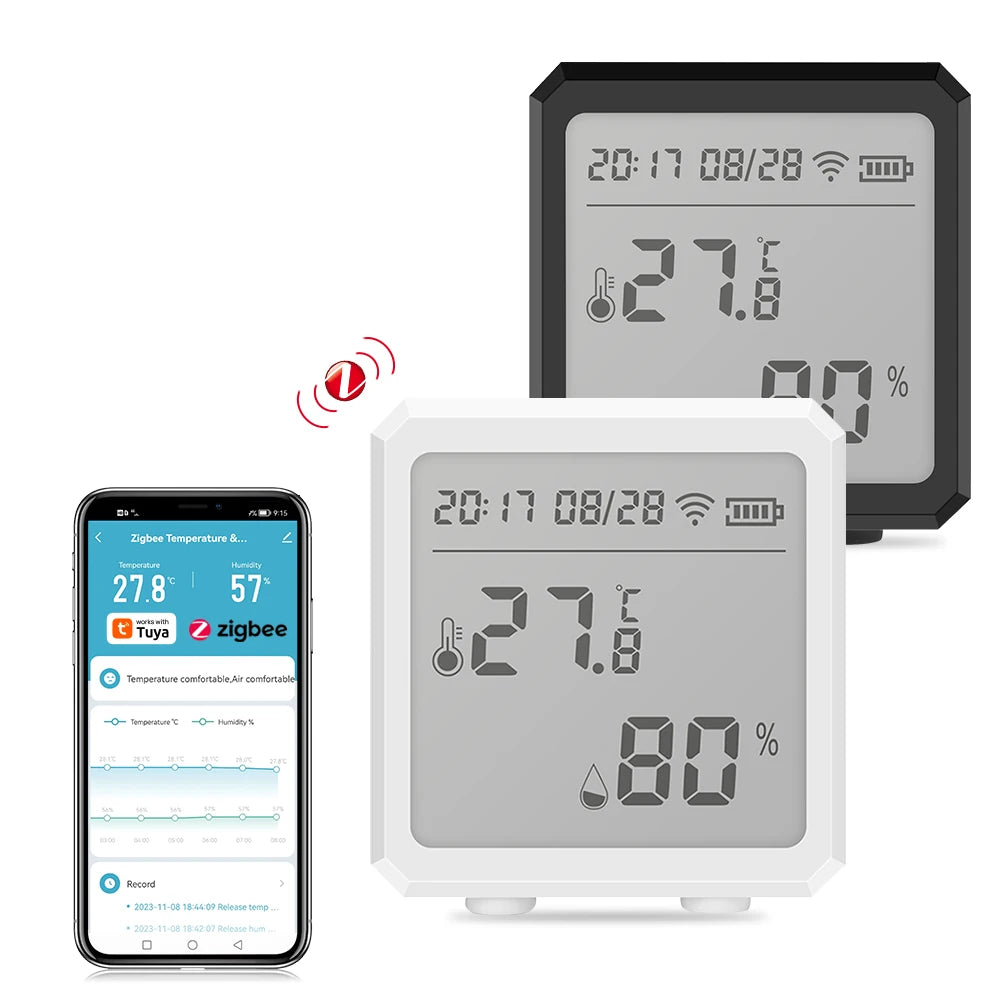
Tuya Zigbee climate sensor for indoor temperature and humidity monitoring.
What to evaluate when comparing Zigbee climate sensors
Instead of relying on anecdotal experiences, compare Zigbee temperature and humidity sensors using measurable criteria that affect everyday performance and long-term reliability.
- Temperature accuracy: Look for models specifying approximately ±0.3–0.5°C under standard indoor conditions.
- Humidity accuracy: Quality sensors commonly offer ±2–3% RH accuracy for residential monitoring.
- Reporting behavior: Adjustable reporting intervals and change thresholds help balance responsiveness with battery life.
- Hub compatibility: Verify support for your preferred ecosystem, such as Tuya Smart, Zigbee hubs, Home Assistant, or Zigbee2MQTT.
- Battery efficiency: Low-power Zigbee communication allows many sensors to operate for extended periods before battery replacement.
- Mesh reliability: Strong Zigbee coverage improves automation consistency and reduces missed updates.
Pros & cons of Zigbee temperature and humidity sensors
| Advantages | Considerations |
|---|---|
|
|
Where to buy and product details
Explore the Zigbee Temperature & Humidity Sensor (LCD, Wireless) if you're looking for a Zigbee-compatible climate sensor that integrates with supported Tuya ecosystems. Before purchasing, verify compatibility with your existing Zigbee gateway, automation platform, or smart home hub to ensure all desired features are available.
Frequently Asked Questions About Zigbee Climate Sensors
-
Are Zigbee temperature sensors accurate?
Most quality Zigbee temperature and humidity sensors provide temperature accuracy of approximately ±0.3–0.5°C and humidity accuracy around ±2–3% RH under normal indoor conditions. Actual performance depends on installation height, airflow, nearby heat sources, and sensor calibration.
-
How does a Zigbee temperature and humidity sensor work?
The sensor continuously measures indoor temperature and humidity using digital sensing components and transmits data through a Zigbee mesh network to a compatible smart hub. The hub can then display readings, store historical data, or trigger home automation routines.
-
Can a Tuya Zigbee temperature sensor work with Home Assistant?
Many Tuya Zigbee sensors can integrate with Home Assistant when paired through supported Zigbee coordinators or Zigbee2MQTT. Compatibility depends on the specific sensor model and gateway you use.
-
What Zigbee hub is needed for a climate sensor?
You need a Zigbee-compatible gateway that supports your chosen sensor. Many models work with Tuya-compatible hubs, while others also support Home Assistant, Zigbee2MQTT, or additional Zigbee ecosystems.
-
How do I improve Zigbee sensor accuracy?
Install the sensor away from direct sunlight, HVAC vents, exterior doors, and heat-producing appliances. Position it where air circulates naturally and allow sufficient time for readings to stabilize after installation.
-
Why does my Zigbee humidity sensor show incorrect readings?
Temporary humidity spikes from showers, cooking, or open windows can influence readings. Dust buildup, poor placement, depleted batteries, or weak Zigbee connectivity may also affect performance. Cleaning the sensor, improving placement, and checking battery status often resolve these issues.
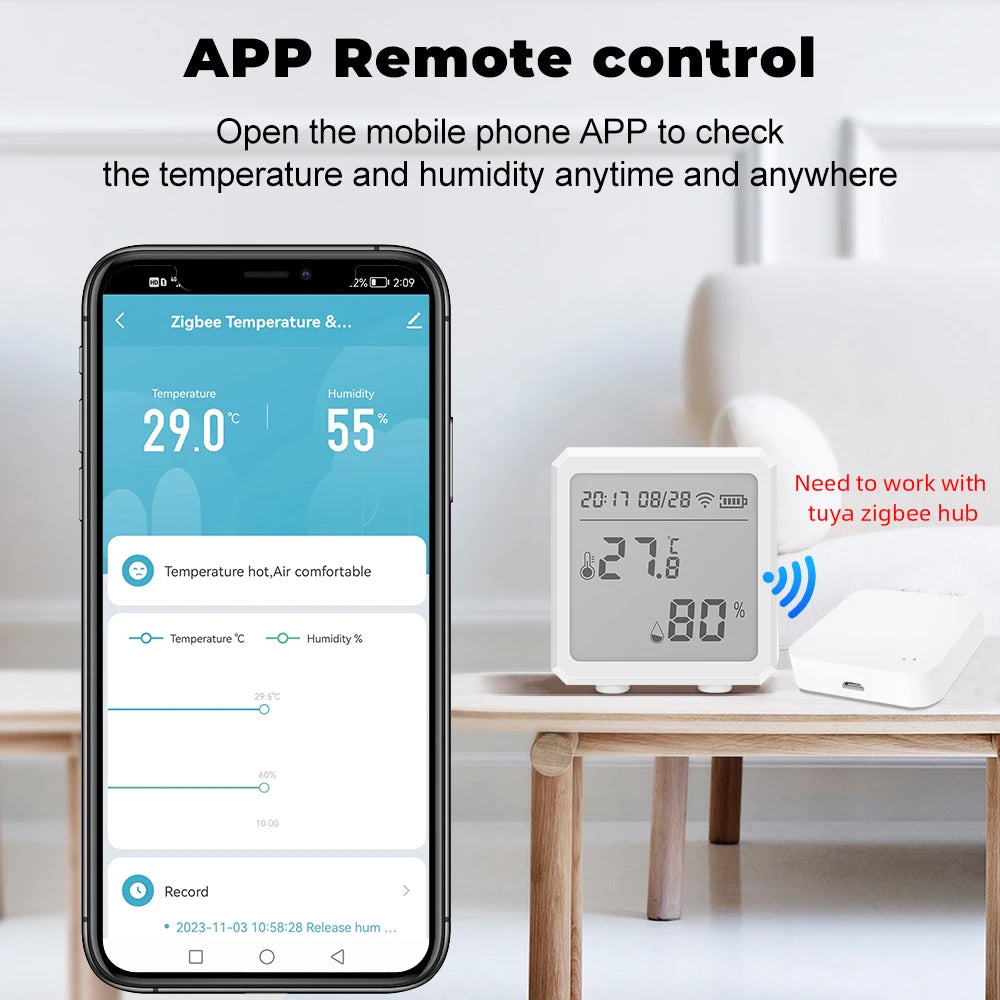
Tuya Zigbee climate sensor for reliable indoor temperature and humidity monitoring.
Final recommendation: Choosing the right Zigbee temperature and humidity sensor
The best Zigbee climate sensor depends on your existing smart home ecosystem, desired automation features, and installation environment. For users already invested in the Tuya platform, the Zigbee Temperature & Humidity Sensor (LCD, Wireless) offers dependable environmental monitoring and integrates well with compatible Zigbee gateways. If you prioritize Home Assistant or Zigbee2MQTT, confirm compatibility before purchasing.
When comparing Zigbee temperature and humidity sensors, focus on measurement accuracy, reporting intervals, battery life, mesh reliability, and ecosystem support rather than specifications alone. Selecting the right sensor and installing it correctly will provide more dependable automation, improved indoor comfort, and better long-term energy efficiency.
Related collections
FAQ (schema-ready)
Q: Is the Tuya Zigbee climate sensor easy to install?
A: Yes. Pair the sensor with a compatible Zigbee hub, place it away from direct heat sources and vents, and allow the readings to stabilize before creating automations.
Q: Can it trigger humidifier or dehumidifier automations?
A: Yes. Compatible Zigbee hubs can use configurable humidity thresholds to automatically control humidifiers, dehumidifiers, fans, or other connected smart devices.
Q: Can the sensor operate without Wi-Fi?
A: Yes. Local Zigbee communication continues through a compatible Zigbee hub even if the internet connection is unavailable, although remote access features typically require internet connectivity.
Q: How long do Zigbee sensor batteries usually last?
A: Battery life varies by reporting frequency, automation activity, and battery type, but many Zigbee climate sensors operate for many months or even years under typical indoor conditions.
Note: For product specifications and the latest compatibility information, visit the product page: Zigbee Temperature & Humidity Sensor (LCD, Wireless) .
Pillar Article: Guide to Smart Home Sensors: Why These Features Deliver Better Climate Control
Other Related Articles:
Explore More:





