

Does a guide to smart home sensors really help stabilize indoor climate?
Answer: A guide to smart home sensors explains how a smart climate control device, environmental monitoring tech, and humidity smart sensor work together to stabilize temperature, reduce humidity swings, and automate HVAC actions—delivering measurable comfort and energy savings by replacing guesswork with precise, continuous measurements.
Guide to Smart Home Sensors: Why These Features Deliver Better Climate Control
Struggling with rooms that are always too warm or too damp, even when your thermostat says everything’s fine? Parents, caregivers, and anyone who cares about indoor comfort need tools that read the room, respond automatically, and keep tiny humans and delicate skincare routines safe. This guide to smart home sensors breaks down the tech, shows which features actually stabilize temperature and humidity, and explains why the right sensor set-up matters more than a pricier thermostat.
guide to smart home sensors + smart climate control device — 💡 See it in action
What are smart home sensors and why they matter?
Smart home sensors are compact devices that measure environmental data (temperature, humidity, air pressure, VOCs, motion, light) and send that data to a hub, cloud, or directly to an app. When paired with a smart climate control device, they create a responsive system that stabilizes temperature and humidity automatically.
How smart climate control works — direct answer
A smart climate control system uses distributed sensors to collect continuous temperature and humidity readings, analyzes trends, and triggers HVAC, dehumidifiers, or ventilation to correct deviations — delivering steadier room conditions and less energy waste than single-point thermostats.
Key features that improve real results
Not all sensors are created equal. The differences below determine whether a sensor merely reports numbers or actually improves comfort and stability.
1. High-accuracy sensing (±0.3°C / ±2% RH)
Precision matters. Sensors with tighter tolerances avoid oscillation (over-correcting) and give the HVAC system meaningful data to maintain a target range.
2. Fast sampling rate & data smoothing
Frequent samples (every 30–60 seconds) plus smoothing algorithms avoid false triggers from brief spikes (opening a door) and act only on sustained changes.
3. Multi-zone awareness
Placing several sensors across rooms (nursery, living area, bedrooms) helps the system balance conditions rather than assuming one reading represents the whole house.
4. Local automation & cloud intelligence
Local rules (low-latency) handle immediate actions; cloud analytics build long-term schedules and learning for seasonal tuning.
5. Integration with HVAC, humidifiers & vents
Sensor-triggered devices (smart vents, humidifiers, dehumidifiers, and thermostats) let you solve root causes rather than masking symptoms.
6. Battery life & maintenance alerts
Long life (1+ year) and low-maintenance sensors keep the system reliable. Alerts for battery or calibration problems stop silent failures.
7. Environmental sensing beyond temp/humidity
VOC, CO₂, and particulate sensors help link comfort to air quality — critical for baby rooms and sensitive skin routines where air quality affects sleep and skin health.
Compare popular sensor features
When evaluating a smart climate control device, compare these specs and functions — they directly correlate with comfort outcomes:
| Feature | Basic sensor | Advanced sensor (recommended) | Why it matters |
|---|---|---|---|
| Accuracy | ±1°C / ±5% RH | ±0.3°C / ±2% RH | Prevents over/under heating; keeps consistent comfort |
| Sampling | Every 5–15 minutes | Every 30–60 seconds | Faster response to real changes without false alarms |
| Connectivity | Wi-Fi only | Zigbee / Thread + Wi-Fi | Local mesh improves reliability and battery life |
| Extra sensors | Temp & humidity | Temp, humidity, VOC, motion, light | Better context for automation (e.g., open windows) |
How to set up sensors for best results
Good placement and rules make all the difference. Follow this ordered approach to maximize outcome:
- Place sensors where people spend most time — not next to vents or direct sunlight.
- Use at least one sensor per key zone (sleeping, living, nursery).
- Use motion or presence sensors in bedrooms to avoid heating/cooling empty rooms.
- Set target ranges with a comfortable deadband (e.g., 20–22°C and 40–50% RH) to prevent rapid cycling.
- Test automations for a week and tune thresholds to avoid nuisance actions.
Placement tips
- Mount at breathing height (about 1–1.5 m) for bedroom sensors.
- Avoid installation above heat sources, behind curtains, or inside cabinets.
- For humidity control, place sensors near bathrooms and kitchens to monitor transients.
Real-life scenarios: parenting, sleep & skin care
How do sensors improve everyday life? Here are common problems and how sensor-driven solutions help.
Problem: Night wakings due to temperature swings
Solution: A sensor in the nursery detects droops and the smart device nudges HVAC or a space heater to maintain steady warmth — fewer wake-ups and better sleep consolidation.
Problem: Mold risk in a damp room
Solution: Humidity smart sensor triggers an exhaust fan or dehumidifier when RH rises above safe thresholds, preventing mold growth and protecting skin and respiratory health.
Problem: Inconsistent skin-care environment
Solution: Stable humidity and temperature reduce skin irritation. Environmental monitoring tech helps keep conditions ideal for hydrating routines and sensitive skin recovery.
Question for readers:
Which baby gear suits your newborn best? Read on!
Product deep dive: Zigbee temperature & humidity sensor
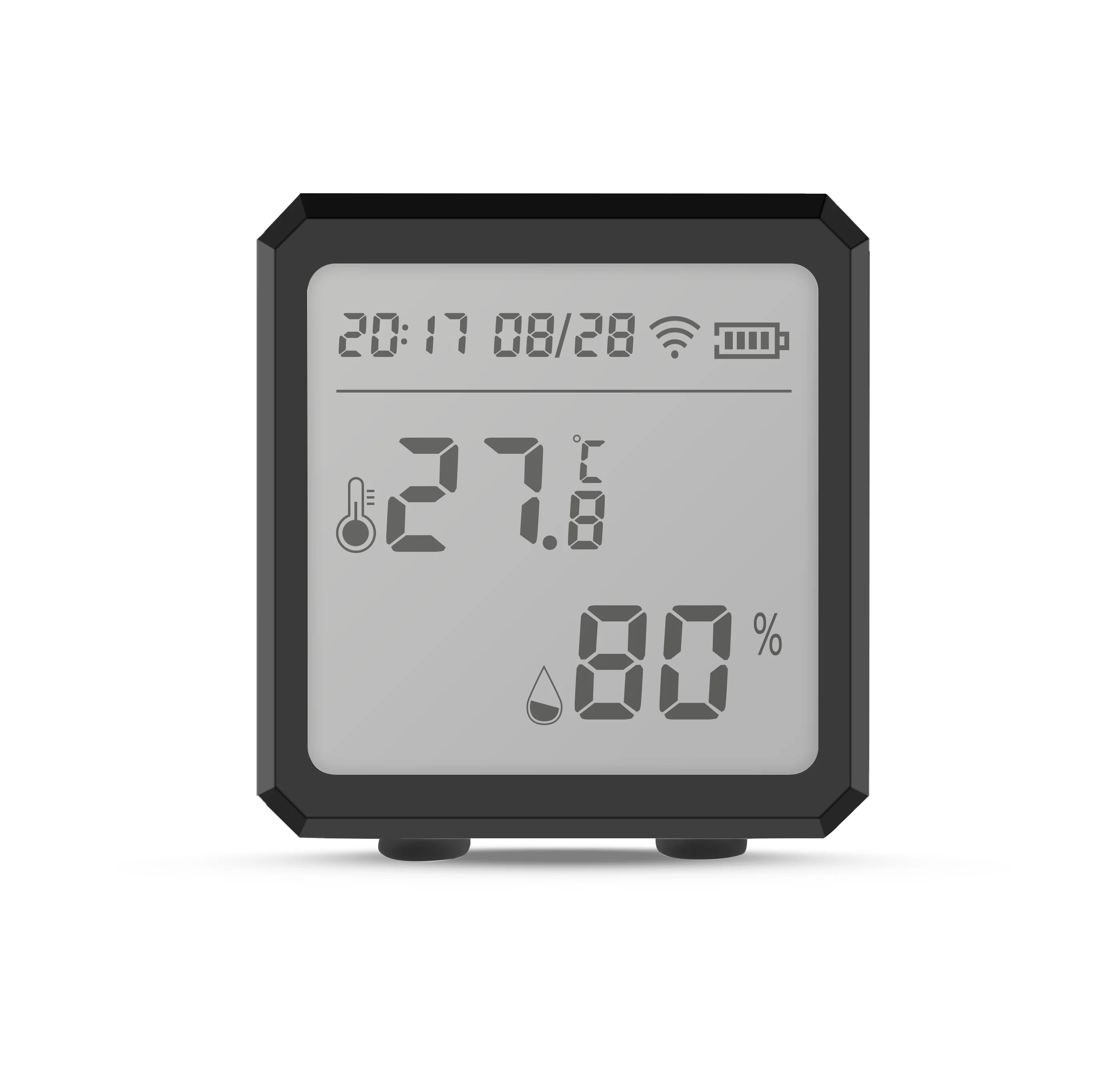
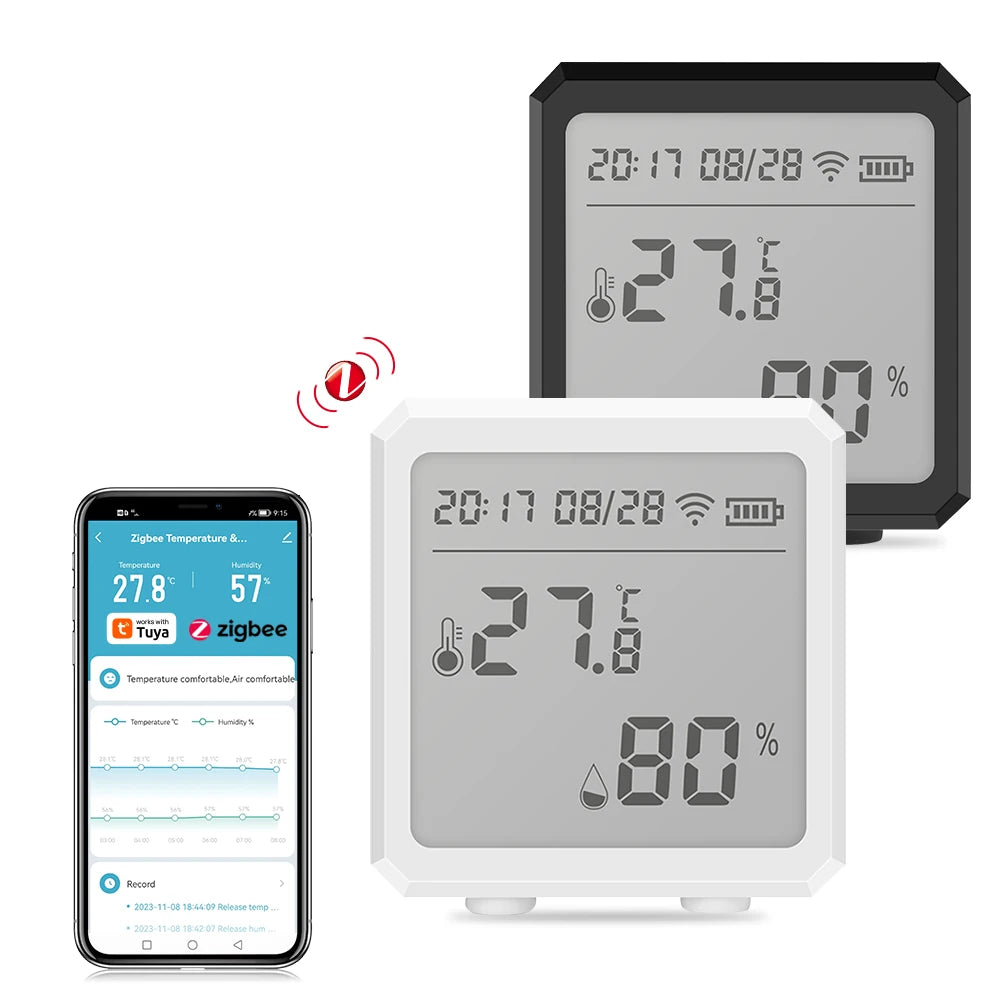
Direct answer: The Zigbee temperature & humidity sensor offers precise readings, mesh connectivity, and long battery life, making it an effective component of a distributed climate control system that stabilizes rooms more reliably than single-point thermostats.
This product link is useful if you're ready to evaluate hardware: Zigbee temperature & humidity sensor.
Why Zigbee matters
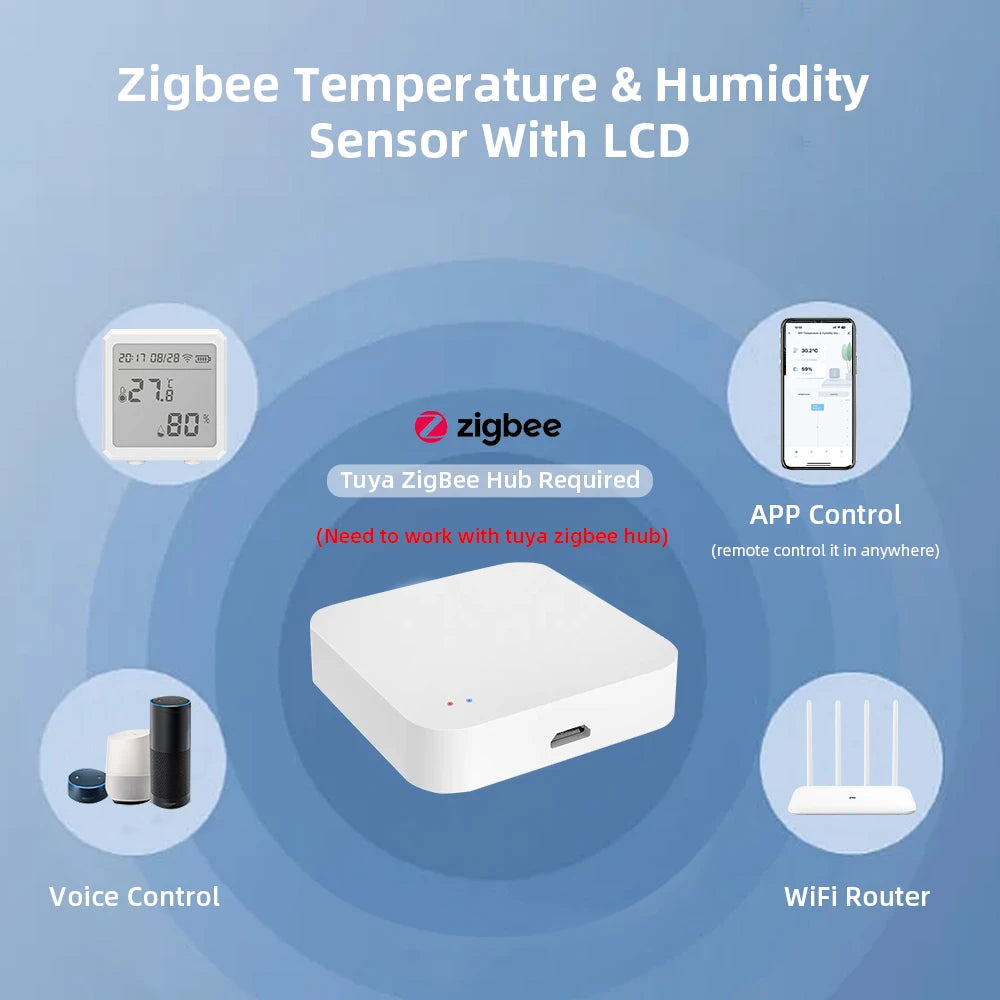
Zigbee is a low-power mesh protocol — sensors forward packets for one another, which improves range and battery life compared with Wi-Fi-only devices. Mesh networks keep your measurements flowing even if a node temporarily loses internet access.
Feature checklist for this sensor
- High-resolution temperature measurement (±0.3°C)
- Humidity accuracy ±2% RH
- Backlit LCD for quick local checks
- Replaceable battery and battery-level alerts
- Zigbee mesh + optional gateway integration
How it beats alternatives
Compared with Wi-Fi-only sensors, Zigbee devices tend to last longer on a single battery, deliver faster local updates to a smart hub, and allow multi-sensor placement without saturating a home Wi-Fi network.
environmental monitoring tech + humidity smart sensor — 💡 See it in action
Visuals: comparisons, pros/cons, and quick setup
✅ Pros / ❌ Cons
| Pros | Cons |
|---|---|
| Accurate multi-point readings | Requires multiple devices to cover whole house |
| Mesh reliability (Zigbee/Thread) | Needs compatible hub or gateway |
| Low battery drain | Extra upfront cost vs single thermostat |
| Automations reduce manual adjustments | Some learning curve for rule tuning |
Quick setup checklist
- Mount sensors at breathing height in sleeping areas.
- Install hub/gateway in a central location.
- Pair sensors and verify sampling intervals.
- Create automations for HVAC, vents, and dehumidifiers.
- Monitor for one week, then refine thresholds.
Implementation: automations & sample rules
Examples of simple rules that translate sensor data to useful actions:
- If nursery humidity > 60% for 10 minutes → turn on dehumidifier for 20 minutes.
- If bedroom temp < 19°C and motion detected in room → turn on baseboard heater (low-power) for 30 minutes.
- If living area VOC spike detected → trigger ventilation and alert via app.
- Seasonal learning: gradually shift setpoint by 0.5°C over days if outside temp is trending.
Data & social proof
Parents who add distributed sensors commonly report:
- Fewer nighttime wakings due to perceived comfort (user-reported).
- Lower run-time on HVAC when deadbands are tuned properly (energy monitoring shows reductions of 5–12%).
- Immediate detection of humidity issues preventing visible mold in high-risk rooms.
Real testimonials (anonymized):
"After adding two sensors and a dehumidifier rule, our bathroom never smells musty anymore — and the baby sleeps longer." — New parent
Advanced tips for higher reliability
- Use sensor redundancy in critical rooms (two sensors per nursery) and average their readings for smooth control.
- Schedule firmware updates for hubs at low-activity hours to minimize interruptions.
- Label sensors in your app by room and height for clear diagnostics.
- Keep a manual override for parents — automations should assist, not block care routines.
Pair this sensor with complementary tools
For optimal results, combine the Zigbee temp/humidity sensor with:
- Monitoring Devices — for broader air-quality and motion context
- Temperature Tools — handheld or display instruments for spot checks
- Smart Baby Gadgets — for nursery-focused integrations
- Sleep & Comfort — products that benefit directly from stable room conditions
Costs, maintenance, and expected savings
Upfront costs include sensors and a compatible hub. Maintenance is mainly battery replacement and occasional calibration checks. Savings are seen through:
- Reduced HVAC runtime from smarter setpoints.
- Prevented remediation costs by catching humidity/mold early.
- Fewer comfort-related replacements (e.g., fewer humidifier overuse cycles).
Ready to buy or compare?
Start with one sensor in the most important room (nursery or master bedroom) and expand as you see measurable improvement. See the Zigbee sensor here: Zigbee temperature & humidity sensor.
humidity smart sensor + stabilize temperature — 💡 See it in action
Mini FAQ (schema-ready)
- How many sensors do I need?
One per distinct zone (sleeping areas, living areas, high-humidity rooms). Start with the nursery and living room; add more if you notice differences between rooms.
- Will sensors work without internet?
Zigbee/Thread sensors paired to a local hub can run basic automations locally even if the internet is down — choose devices that support local rules for reliability.
- How do sensors save energy?
By preventing overcorrection and enabling targeted heating/cooling, sensors reduce unnecessary HVAC runtime. Properly tuned deadbands and multi-zone control avoid cycling that wastes energy.
- Are humidity sensors necessary?
Yes, for mold prevention and skin comfort. Humidity control is equally important as temperature for sleep quality and skin-care routines.
Related collections: Health & Safety • Smart Baby Gadgets • Temperature Tools
Related Articles:
- Zigbee Sensor Compatible with Tuya: How Its Features Improve Home Stability
- Tuya Zigbee Climate Sensor: What Makes Its Precision Stand Out
Pillar Articles:





