

Does a temperatur sensor Google Home setup actually make home climate control easier?
Yes. A temperatur sensor Google Home setup can improve room-by-room climate control by providing more accurate temperature readings than relying on a single thermostat alone. Pairing a Zigbee temperature sensor with a compatible hub or using a Matter-compatible temperature sensor allows Google Home automations to respond to conditions in individual rooms, helping reduce hot and cold spots while improving comfort and energy efficiency.
Temperatur Sensor Google Home: Top Options That Sync Smoothly
⏱ 7 min read
A central thermostat doesn't always reflect the temperature throughout your home. Upstairs bedrooms, home offices, and rooms with large windows often experience noticeably different conditions. Choosing the right temperatur sensor Google Home setup—whether that's a Zigbee temperature sensor, a Tuya Zigbee solution, or a compatible Matter device—makes it easier to monitor individual spaces and build smarter automations for heating, cooling, and ventilation.
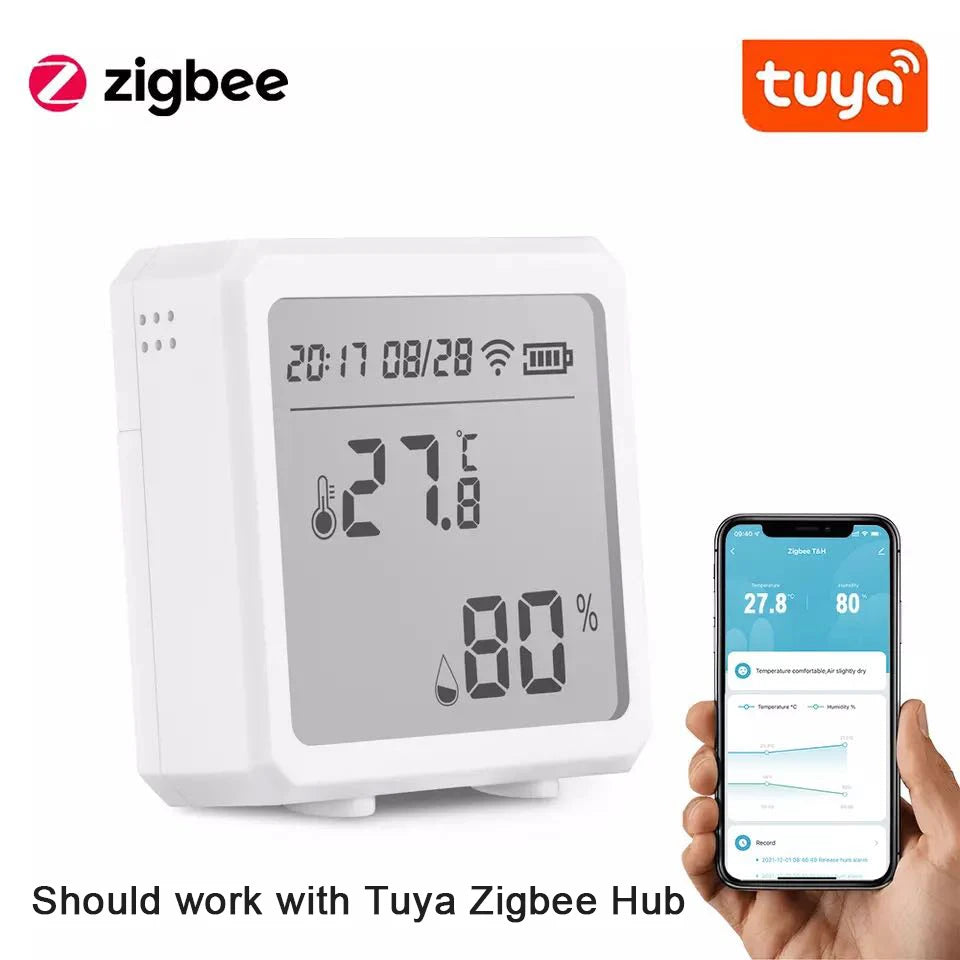
temperatur sensor google home + Zigbee temperature sensors — See it in action
Why Zigbee temperature sensors beat basic Wi-Fi for Google Home
Wi-Fi temperature sensors can work well for simple monitoring, but Zigbee sensors are often the preferred choice for smart home climate control because they offer greater reliability, lower power consumption, and faster response times when paired with a compatible hub.
- Reliable mesh networking: Each powered Zigbee device helps extend network coverage, improving connectivity throughout larger homes.
- Long battery life: Most Zigbee temperature and humidity sensors operate for one to two years on a single coin-cell battery, depending on reporting frequency.
- Responsive automations: Local communication through a Zigbee hub typically delivers quicker sensor updates than cloud-dependent Wi-Fi devices.
- Scalable deployment: Adding multiple room sensors is straightforward without placing additional load on your Wi-Fi network.
These advantages make Zigbee particularly suitable for monitoring bedrooms, home offices, basements, and other areas where accurate room-level temperature readings improve automation performance.
Best options: quick comparison
The best temperatur sensor Google Home setup depends on your existing smart home ecosystem. For most users, a Zigbee temperature and humidity sensor connected through a compatible hub offers an excellent balance of accuracy, battery life, and automation flexibility. Matter-compatible sensors are becoming increasingly attractive for simplified cross-platform compatibility, while DIY solutions remain ideal for advanced users.
- Tuya Zigbee sensor + Tuya Zigbee hub: Affordable, widely available, and suitable for users building a Zigbee-based Google Home system.
- Manufacturer-branded Zigbee temperature and humidity sensors: Typically offer better firmware support, longer software updates, and stronger ecosystem integration.
- Matter-compatible temperature sensors: Designed for broader interoperability across supported smart home platforms with simplified setup.
- DIY ESP32 or ESP8266 sensors: Highly customizable for Home Assistant users who prefer local control and advanced automation.
Who each option fits best
- Tuya Zigbee: Best for budget-conscious users seeking dependable everyday monitoring.
- Branded Zigbee sensors: Ideal for homeowners prioritizing long-term stability and firmware support.
- Matter-compatible sensors: Suitable for users planning a future-proof multi-platform smart home.
- DIY sensors: Recommended for enthusiasts comfortable configuring hardware, firmware, and local integrations.
How to set up temperatur sensor Google Home (step-by-step)
Whether you're using a Matter-compatible device or a Zigbee temperature sensor with a hub, the setup process follows the same basic workflow: pair the sensor, verify temperature reporting, then build automations inside Google Home or your connected smart home platform.
- Select a compatible hub or platform. If you're using a Zigbee temperature sensor, choose a compatible hub such as a Tuya Zigbee hub. Matter-compatible sensors can usually be added directly through the Google Home app when supported.
- Install the sensor correctly. Mount the sensor approximately 1.2–1.5 meters above the floor on an interior wall. Keep it away from direct sunlight, windows, HVAC vents, exterior doors, and heat-producing appliances for the most accurate readings.
- Pair the device. Add the sensor using the manufacturer's app or hub software and confirm that both temperature and humidity readings update correctly.
- Connect with Google Home. Link the hub or compatible service using the Google Home app through the provider's "Works with Google" integration, or complete Matter onboarding if your sensor supports it.
- Create automations. Build routines that respond to room temperatures, such as turning on fans, adjusting smart thermostats, or sending notifications when thresholds are exceeded.
- Verify performance. Observe readings over several days and fine-tune sensor placement or automation thresholds if temperatures fluctuate more than expected.
Quick tips
- Use a temperature buffer (hysteresis) of approximately 1–2°C to prevent heating or cooling equipment from cycling too frequently.
- Keep sensors away from direct airflow created by ceiling fans or HVAC registers.
- Give each sensor a descriptive room name to simplify automation management and voice control.
- Check battery status periodically to maintain reliable reporting.
- Update hub and sensor firmware whenever new versions become available for improved compatibility.
Side-by-side specs and pros/cons
| Option | Best for | Typical battery life | Setup difficulty | Advantages | Limitations |
|---|---|---|---|---|---|
| Tuya Zigbee sensor | Budget-friendly smart homes | 6–12 months | Easy | Affordable, broad compatibility, integrates with Tuya Zigbee hubs | Cloud integration varies by ecosystem and firmware version |
| Branded Zigbee temperature & humidity sensor | Long-term reliability | 12–24 months | Moderate | Consistent firmware support, dependable reporting, strong ecosystem integration | Higher upfront cost |
| DIY sensor (ESP32 + sensor) | Advanced enthusiasts | Varies by hardware | Advanced | Highly customizable, local control, flexible sensor options | Requires configuration, maintenance, and technical knowledge |
Pros & cons (quick checklist)
- ✅ Zigbee networks provide excellent reliability with low power consumption.
- ✅ Tuya Zigbee devices offer an affordable entry point for Google Home integrations.
- ✅ Branded sensors generally receive longer firmware support and more consistent updates.
- ❌ DIY solutions offer maximum flexibility but require ongoing maintenance and troubleshooting.
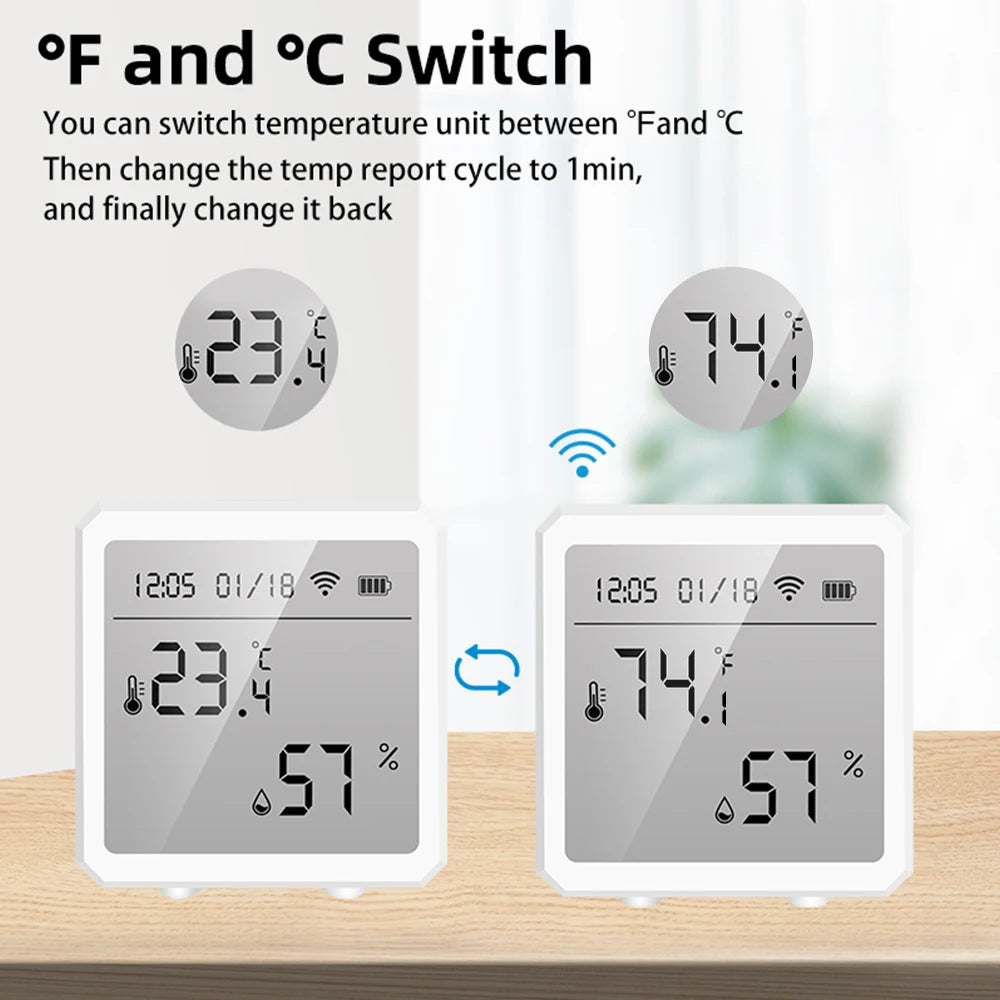
Zigbee temperature and humidity sensor paired with a Tuya Zigbee hub for Google Home integration.
DIY smart home sensors: when to build vs buy
A DIY Google Home temperature sensor setup offers maximum flexibility, especially if you already use Home Assistant or enjoy building custom smart home projects. You can select your preferred sensors, adjust reporting intervals, and keep temperature data entirely on your local network. However, the added control comes with additional setup and ongoing maintenance.
When a DIY setup makes sense
- Custom hardware: ESP32 and ESP8266 development boards can support temperature, humidity, CO₂, VOC, and other environmental sensors.
- Local automation: Home Assistant combined with a Zigbee coordinator or Matter bridge enables advanced automations with minimal cloud dependence.
- Flexible reporting: Configure update intervals, calibration offsets, and automation logic to suit your home's requirements.
- Expandable platform: Add additional sensors or smart devices over time without replacing your existing system.
Potential drawbacks
- Longer setup time: Firmware installation, device pairing, and automation configuration require technical knowledge.
- Ongoing maintenance: Software updates, backups, and troubleshooting become your responsibility.
- Compatibility management: Integrating DIY hardware with Google Home often requires Home Assistant, Matter bridges, or additional gateway software.
- No manufacturer support: Unlike commercial products, replacement and warranty coverage are generally unavailable.
For most homeowners seeking dependable temperature monitoring with minimal effort, a commercially available Zigbee temperature and humidity sensor remains the most practical option. DIY projects are best suited to users who value customization more than convenience.
Recommended product
If you prefer a ready-to-use solution, the following sensor provides reliable temperature and humidity monitoring for compatible Zigbee ecosystems:
You can also browse Monitoring Devices and Temperature Tools for additional compatible monitoring equipment and accessories.
Troubleshooting Google Home temperature sensors
Sensor not appearing in Google Home
If your temperature sensor does not appear in Google Home, first verify that it has been successfully added to the manufacturer's app or Zigbee hub. For Zigbee devices, the hub—not the sensor itself—is what connects to Google Home. If you're using a Matter-compatible temperature sensor, confirm that Matter pairing completed successfully and that the device is running the latest firmware.
Temperature not updating
Delayed or inaccurate readings are commonly caused by poor sensor placement or long reporting intervals. Move the sensor away from direct sunlight, HVAC vents, exterior doors, and heat-producing electronics. If supported, shorten the reporting interval in the device settings while balancing battery consumption.
Matter connection issues
If a Matter temperature sensor goes offline, restart the sensor, verify that your Thread border router or Wi-Fi network is operating normally, and check for available firmware updates. Removing and re-adding the device can resolve pairing problems that occur after network changes.
Hub synchronization problems
If a Zigbee temperature sensor reports correctly in the hub app but not in Google Home, refresh the cloud connection by unlinking and relinking the integration. Also confirm that the hub firmware is current and that the sensor remains connected to the Zigbee mesh network.
Short battery life
Frequent temperature reporting, weak Zigbee signal strength, or extreme environmental conditions can reduce battery life. Position the sensor within reliable range of the hub or nearby Zigbee router devices and use the default reporting interval unless faster updates are necessary.
FAQ (Schema-ready)
Does Google Home support Matter temperature sensors?
Yes. Google Home supports compatible Matter temperature sensors, allowing them to be added directly through the Google Home app when the device manufacturer supports Matter. Available features may vary depending on the sensor and current Google Home functionality.
Can a Zigbee temperature sensor work with Google Home?
Yes, but most Zigbee temperature sensors require a compatible Zigbee hub or gateway. The hub integrates with Google Home through a supported cloud service or local bridge such as Home Assistant.
What is the difference between Nest Temperature Sensor and ambient temperature sensors?
A Nest Temperature Sensor is designed to work with compatible Nest thermostats to help prioritize the temperature of a selected room. General ambient temperature sensors measure environmental conditions and can be used for monitoring or broader smart home automations depending on platform compatibility.
Can Google Home trigger automations from temperature changes?
Google Home supports temperature-based automations for compatible devices and integrations. The available triggers and actions depend on the connected ecosystem, device capabilities, and whether the sensor communicates through Matter, a Zigbee hub, or another supported platform.
Do I need a hub for a Zigbee temperature sensor?
In most cases, yes. Zigbee sensors communicate with a Zigbee hub or coordinator rather than connecting directly to Wi-Fi. The hub then shares sensor data with Google Home or another smart home platform.
Can Tuya Zigbee temperature sensors work with Google Home?
Yes. Tuya Zigbee temperature sensors can work with Google Home when paired with a compatible Tuya Zigbee hub that supports Google Home integration.
Can Google Home display temperature and humidity together?
Many compatible temperature and humidity sensors report both measurements. Whether Google Home displays both values depends on the specific device integration and the features currently supported by the Google Home platform.
What is the best temperature sensor for Google Home?
The best choice depends on your ecosystem. Matter-compatible sensors offer excellent future compatibility, while quality Zigbee temperature and humidity sensors paired with a reliable hub remain an excellent option for stable connectivity, long battery life, and dependable automations.
Pillar Article: Smart Sensors for Home: Honest Comparison of Top Climate Monitoring Picks
Other Related Articles:
- Humidity Too High in House? Best Smart Detectors to Fix It Fast
- How to Control the Humidity: Which Smart Sensors Actually Work Best
- How to Improve Indoor Air Quality: Top Smart Monitors Compared
- How to Prevent Mold in Home: Best Sensors Reviewed for Early Detection
Explore More:





