

Best Pretend Play Toys That Keep Kids Engaged Longer
Do the Best Pretend Play Toys Really Improve Creativity and Learning?
Yes—when you choose thoughtfully designed products, the best pretend play toys can support far more than entertainment. Open-ended role-play encourages children to build creativity, language, problem-solving, and social-emotional skills while practicing everyday situations through hands-on exploration. Toys that allow children to imagine, create, and interact rather than simply press buttons often deliver greater long-term educational value.
Parents searching for the best toys for pretend play should look beyond colorful designs and trending features. The most effective options match a child's developmental stage, encourage independent and cooperative play, and remain engaging as new ideas and skills emerge.
In this guide, you'll discover:
- Which types of pretend play toys offer the greatest developmental benefits
- Why wooden and Montessori-inspired toys remain popular with parents and educators
- How different toy categories support communication, creativity, and confidence
- What buying factors matter most before investing in a pretend play set
Best Pretend Play Toys Review: Are They Worth Buying?
Choosing the best pretend play toys can feel overwhelming with so many options available. This guide reviews popular categories, explores the best wooden pretend play toys for toddlers, provides a detailed review of Montessori pretend play toys, and explains which pretend play toys improve social skills most effectively. Whether you're shopping for a curious toddler or an imaginative preschooler, you'll learn how to choose toys that encourage meaningful play instead of becoming short-lived distractions.
⏱ 8 min read
Every parent wants toys that do more than occupy a child's attention. The best pretend play toys inspire children to invent stories, solve everyday challenges, communicate with others, and develop confidence through repeated imaginative experiences.
Here's what matters most: the right toy should grow with your child, encourage open-ended play, and provide opportunities for both independent exploration and shared family interaction.
Curious which toys truly make a difference?
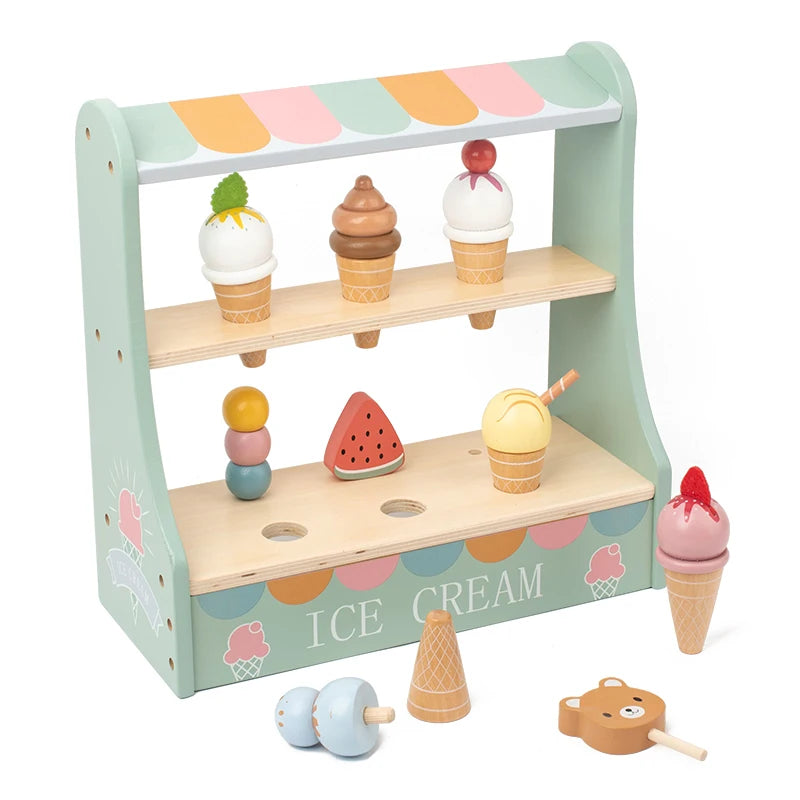
Best pretend play toys that spark imagination daily • See it in action
Why Pretend Play Matters for Your Child's Growth
Pretend play is much more than make-believe—it gives children a safe way to practice real-life experiences, explore emotions, and develop essential lifelong skills.
Whether your child is pretending to prepare meals, serve customers, care for dolls, or run a small business, each activity strengthens important areas of development.
- Language and communication: Children expand vocabulary and practice conversations while interacting with family and friends.
- Social-emotional development: Role-playing encourages empathy, cooperation, and understanding of different perspectives.
- Problem-solving and critical thinking: Open-ended scenarios help children make decisions and adapt creatively.
- Confidence and independence: Repeating familiar real-world routines helps children feel capable in everyday situations.
Research in early childhood development consistently shows that imaginative play supports cognitive growth, executive function, and social understanding. These benefits become even stronger when children are free to direct their own play rather than follow fixed electronic prompts.
For additional hands-on experiences, pairing pretend play with sensory-rich activities from Sensory Toys collections can create even more engaging learning opportunities.
What Are the Best Pretend Play Toys?
The best pretend play toys encourage open-ended exploration instead of providing only one way to play. High-quality wooden playsets, Montessori-inspired toys, and realistic role-play sets help children build creativity, communication, and independence while remaining durable enough for years of everyday use.
Top Categories Parents Trust
- Kitchen & food playsets – Encourage everyday routines, imaginative cooking, and cooperative family play.
- Shop & cashier toys – Build communication, counting, turn-taking, and early money concepts.
- Doctor kits – Help children understand healthcare visits while developing empathy and caregiving skills.
- Dollhouses – Inspire storytelling, emotional expression, and creative role-playing.
Each category supports different developmental goals, so the best choice depends on your child's age, interests, and preferred style of play. In the next sections, we'll compare these options in greater detail to help you choose confidently.
Best Wooden Pretend Play Toys for Toddlers
Benefits of Wooden Toys
Many of the best wooden pretend play toys for toddlers are designed to encourage open-ended exploration rather than directing every interaction. Their simple designs invite children to create their own stories, making the same toy engaging in different ways as they grow.
- Excellent durability that stands up to years of daily play.
- Quality materials and finishes commonly found in well-made educational toys.
- Encourage focused, imaginative play without excessive lights or sounds.
- Timeless designs that remain suitable across multiple developmental stages.
- Strong long-term value because many wooden toys can be passed down to siblings.
Potential Drawbacks
- Higher initial purchase price than many plastic alternatives.
- Fewer electronic features for children who enjoy interactive lights or music.
- Heavier construction may require slightly more storage space.
Wood vs Plastic Comparison
Plastic pretend play toys can certainly be enjoyable, especially when portability, colorful accessories, or lower prices are priorities. However, toys packed with automatic sounds and fixed play patterns sometimes reduce opportunities for children to invent their own scenarios.
Wooden pretend play sets generally place the child in control of the experience. Instead of the toy providing the entertainment, children create conversations, solve pretend problems, and develop imaginative stories through self-directed play.
Parents interested in choosing durable educational toys can also explore additional ideas in our Baby Growth & Learning resources.
Detailed Review of Montessori Pretend Play Toys
Montessori pretend play emphasizes purposeful, hands-on learning that reflects everyday life. Rather than overwhelming children with distractions, these toys encourage concentration, independence, and meaningful exploration through realistic activities.
What Makes Montessori Pretend Play Different?
- Hands-on learning using realistic objects children can recognize.
- Minimal distractions that promote concentration instead of overstimulation.
- Independent exploration with opportunities to make choices and solve problems.
- Practical life experiences that connect play with real-world routines.
- Skill development through repetition rather than scripted play.
Top Montessori-Inspired Toys
Many Montessori-inspired pretend play products focus on activities children naturally observe at home and in their communities. Popular examples include:
- Pretend kitchens with realistic utensils and food preparation.
- Market stalls and ice cream counters that encourage conversation and counting.
- Cleaning and household activity sets that build independence.
- Sorting trays, organization activities, and practical storage tasks.
- Role-play sets based on everyday family routines.
Who Should Buy Them?
Montessori-inspired pretend play toys are especially suitable for toddlers and preschoolers who enjoy exploring independently, repeating familiar activities, and learning through hands-on experiences. Parents seeking quieter, screen-free play environments often appreciate their simple, open-ended design.
One limitation is that children who prefer highly interactive electronic toys may initially find Montessori-style toys less exciting. However, many families discover that imaginative engagement grows over time as children create increasingly complex play scenarios.
These learning experiences pair naturally with calm daily routines supported by Sleep & Comfort essentials.
Want a toy that combines fun and real-life skills?
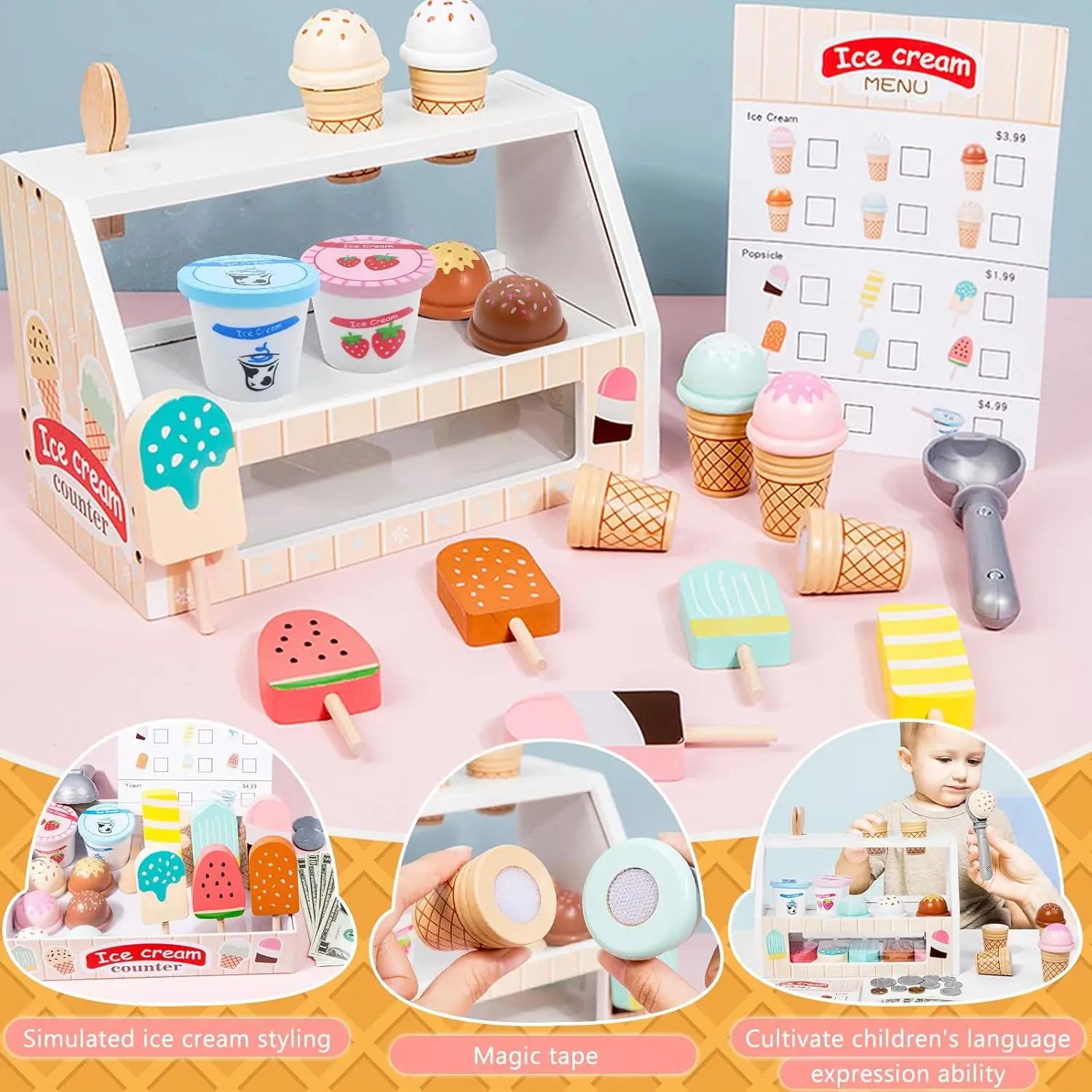
Best wooden pretend play toys for toddlers that inspire learning • See it in action
Which Pretend Play Toys Improve Social Skills?
The pretend play toys that improve social skills most effectively are those designed for cooperative interaction. They encourage children to communicate, negotiate roles, solve small conflicts, and work together while creating imaginative stories.
Best Collaborative Toys
- Role-play counters including grocery stores, cafés, and ice cream shops.
- Doctor and veterinarian kits that promote empathy and caregiving.
- Play kitchens that encourage teamwork and shared storytelling.
- Family doll sets for practicing everyday conversations and routines.
Role-Playing Scenarios
Collaborative pretend play naturally introduces situations where children take turns serving customers, preparing meals, caring for patients, or helping family members. These activities strengthen communication while encouraging children to understand different perspectives.
- Customer-and-shopkeeper conversations.
- Family meal preparation.
- Medical checkups using doctor kits.
- Problem-solving through everyday household situations.
Sharing and Communication
Open-ended role play teaches children to:
- Take turns during group activities.
- Practice active listening and clear communication.
- Resolve simple disagreements through cooperation.
- Develop empathy by switching roles during play.
- Build confidence when interacting with siblings and friends.
Structured daily routines supported by Mobility & Training tools can further reinforce healthy habits alongside imaginative play.
Featured Product Review: Ice Cream Counter Playset
The Ice Cream Counter Playset stands out among the best pretend play toys because it blends imaginative role-play with practical learning opportunities. Children can take turns serving customers, organizing orders, counting play money, and practicing everyday conversations, making it an engaging choice for both independent exploration and cooperative family play.
Key Features
- Interactive ice cream shop experience that encourages imaginative role-playing.
- Colorful, child-friendly design that keeps young learners engaged.
- Supports counting, sorting, matching, and early number recognition.
- Encourages communication through customer-and-shopkeeper interactions.
- Suitable for both solo play and small group activities.
Developmental Benefits
- Builds confidence as children create and lead their own play scenarios.
- Strengthens communication and conversational skills through role-play.
- Develops creativity by encouraging storytelling and imaginative thinking.
- Supports early math concepts including counting, sorting, and simple transactions.
- Promotes cooperation, patience, and turn-taking during shared play.
Pros and Cons
| Pros | Cons |
|---|---|
| Highly interactive and encourages open-ended play | Requires adequate floor or tabletop space |
| Supports social interaction and cooperative learning | Younger toddlers may benefit from adult supervision |
| Durable design suitable for repeated use | Focused primarily on an ice cream shop theme |
Best for: Toddlers and preschoolers who enjoy imaginative role-play, interactive learning, and playing with siblings or friends.
Quick Comparison of Popular Pretend Play Toys
| Toy Type | Recommended Age | Best For | Primary Skill Focus | Durability |
|---|---|---|---|---|
| Wooden Kitchen Set | 2–6 years | Independent and family role-play | Creativity & practical life skills | High |
| Doctor Kit | 3–6 years | Empathy and cooperative play | Social-emotional development | Medium |
| Ice Cream Counter | 3–6 years | Interactive group play | Communication, counting & teamwork | High |
| Dollhouse | 3–6 years | Storytelling and imaginative play | Creativity & emotional expression | Medium |
When comparing pretend play toys, consider your child's interests, available play space, and the developmental skills you want to encourage. Open-ended toys that support multiple types of play typically provide the greatest long-term value.
Parents often enhance imaginative play by incorporating realistic accessories and everyday items from Feeding Tools collections to create more engaging role-playing experiences.
How to Choose the Right Pretend Play Toy
Selecting the best pretend play toys is easier when you focus on your child's developmental stage, interests, available space, and long-term value. The right toy should encourage open-ended play while remaining engaging as your child grows.
By Age
- 18 months–2 years: Choose simple pretend play sets with large, easy-to-grasp pieces and realistic everyday objects.
- 2–3 years: Kitchen sets, food toys, and basic role-play accessories encourage imitation and vocabulary development.
- 3–4 years: Shop counters, doctor kits, and dollhouses support storytelling, cooperation, and problem-solving.
- 4–6 years: More detailed pretend play sets allow children to invent complex scenarios, practice teamwork, and strengthen social skills.
By Developmental Goal
- Creativity: Open-ended kitchen sets, dollhouses, and storytelling toys.
- Communication: Grocery stores, cafés, and ice cream counters that encourage conversation.
- Social-emotional growth: Doctor kits and family role-play sets that develop empathy.
- Early learning: Toys that naturally incorporate counting, sorting, matching, and simple problem-solving.
By Space and Storage
- Compact tabletop sets work well for apartments and smaller play areas.
- Larger kitchens or market stands are ideal when dedicated play space is available.
- Look for durable pieces that store easily in bins or shelves to encourage independent cleanup.
By Budget
- Prioritize quality over quantity—one versatile pretend play set often provides more value than several single-purpose toys.
- Choose durable materials that can withstand years of everyday play.
- Consider whether the toy offers multiple ways to play as your child develops new interests and skills.
A great pretend play toy doesn't simply entertain—it continues supporting creativity, confidence, and learning throughout early childhood.
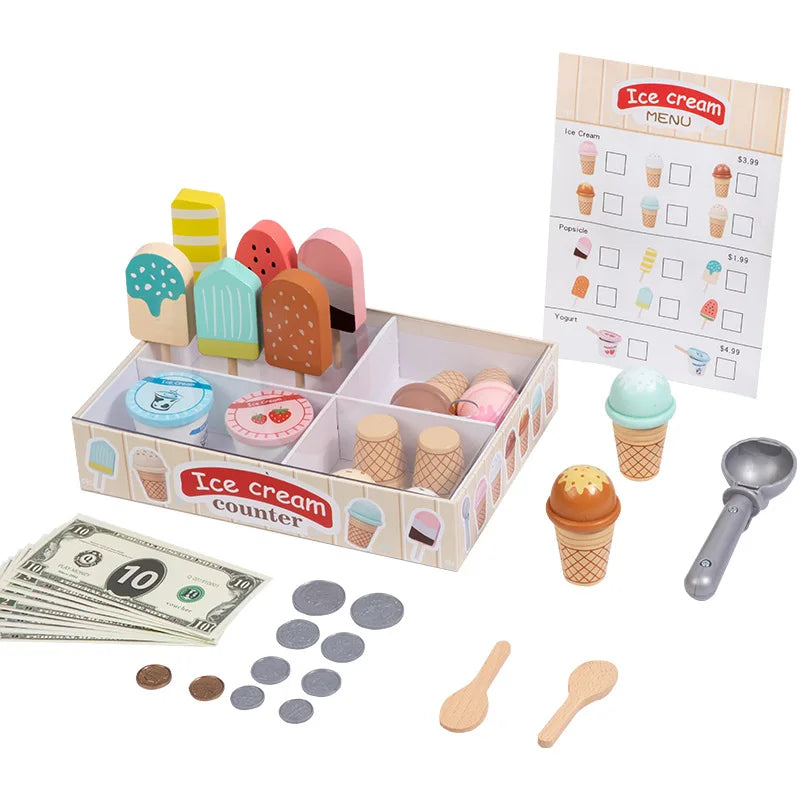
Which pretend play toys improve social skills faster • See it in action
Ready to upgrade your child's playtime?
Frequently Asked Questions
What are the best pretend play toys for toddlers?
Simple wooden kitchens, food sets, cleaning toys, and realistic household role-play toys are excellent choices because they encourage safe, open-ended exploration while building language and motor skills.
What are the best pretend play toys for preschoolers?
Preschoolers often benefit from doctor kits, grocery stores, cash registers, dollhouses, play kitchens, and interactive shop counters that encourage storytelling, cooperation, and creative problem-solving.
Which pretend play toys improve social skills the most?
Collaborative toys such as play kitchens, market stalls, doctor kits, and ice cream counters encourage conversation, sharing, turn-taking, empathy, and teamwork during group play.
Are wooden pretend play toys better than plastic ones?
Neither material is universally better, but many parents choose wooden pretend play toys because of their durability, timeless design, and ability to encourage open-ended imaginative play. Plastic toys may offer more interactive features and lower prices.
What are the best Montessori pretend play toys?
Montessori-inspired pretend play toys focus on practical life activities such as cooking, organizing, cleaning, shopping, and caring for others. These toys encourage independence, concentration, and hands-on learning.
Which pretend play brands are best for children ages 0–6?
Well-known brands such as Melissa & Doug, Hape, PlanToys, Janod, Tender Leaf Toys, Lovevery, and KidKraft are widely recognized for producing quality pretend play toys across different age groups.
How many pretend play toys should a child have?
Most families can build a versatile play environment with two or three high-quality pretend play sets that offer multiple ways to play instead of purchasing numerous single-purpose toys.
What safety features should I look for when buying pretend play toys?
Choose age-appropriate toys with sturdy construction, smooth edges, non-toxic finishes, securely attached components, and pieces large enough to avoid choking hazards for younger children. Always follow the manufacturer's recommended age guidelines.
Final Thought: The best pretend play toys provide far more than entertainment. They help children develop creativity, communication, confidence, and practical life skills through meaningful hands-on experiences. Investing in a well-designed pretend play toy today can support learning and imaginative play for years to come.
Related Articles:
- Best Educational Preschool Toys: Honest Review Guide
- Wooden Ice Cream Play Set Review: What Parents Love Most
Pillar Articles:





