

Pretend Play Toys for 4 Year Olds That Spark Imagination
What are the best pretend play toys for 4 year olds?
Pretend play toys for 4 year olds encourage creativity, communication, problem-solving, and independence by allowing children to recreate real-life experiences through imagination. The best pretend play toys combine open-ended scenarios, realistic props, and interactive features that help preschoolers practice skills like storytelling, social interaction, counting, and decision-making while staying engaged for longer periods.
Pretend Play for 4 Year Olds: Best Options Ranked
⏱ 7 min read — Pretend play for 4 year olds is more than entertainment—it helps children understand everyday experiences, express emotions, and develop important early learning skills. From running an imaginary shop to caring for toys or creating new stories, the right role play setup can turn ordinary afternoons into meaningful, screen-free activities.
Finding the best pretend play toys for 4 year olds can be challenging. Many parents look for activities that hold attention, support development, and avoid adding unnecessary toy clutter. The most effective choices are usually open-ended toys that allow children to create their own stories instead of following only one fixed way to play.
This guide is designed for parents, caregivers, and families searching for pretend play toys for 3 4 year olds who want options that encourage independent play, social skills, and imaginative thinking. We compare popular role play themes, explain their developmental benefits, and highlight what makes each type valuable for preschoolers.
Explore Baby Growth & Learning
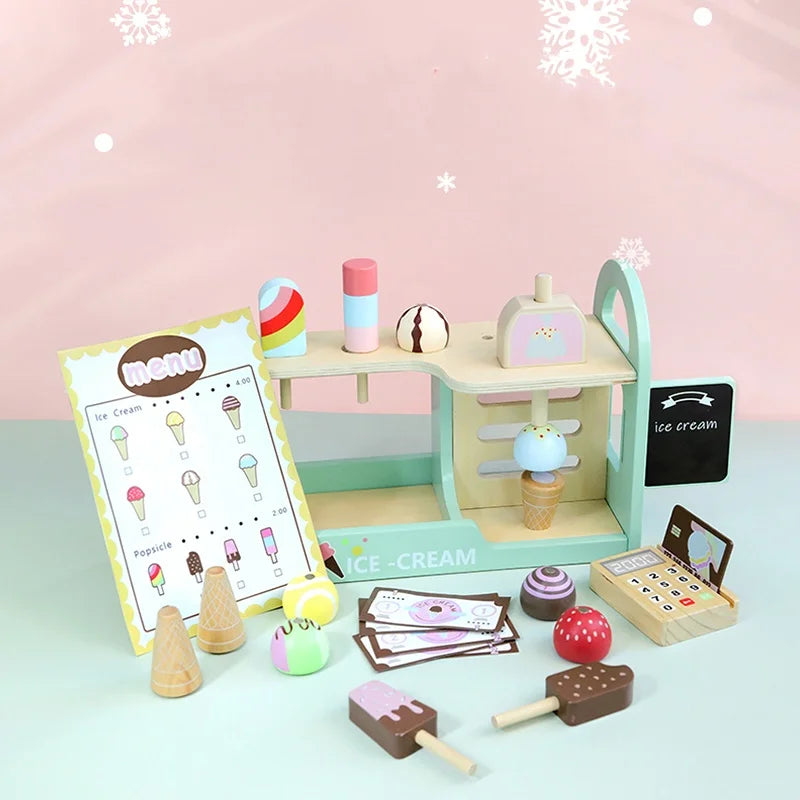
Creative pretend play for 4 year olds that keeps preschoolers engaged at home See it in action
How Pretend Play Supports Development at Age 4
Imaginative play for 4 year olds helps children learn by acting out familiar situations, creating stories, and exploring different roles. At this age, children often begin using more complex pretend scenarios, making connections between everyday life and creative play.
High-quality pretend play experiences support several areas of preschool development:
- Language skills: Role-playing encourages children to describe situations, ask questions, create conversations, and expand their vocabulary through storytelling.
- Social-emotional growth: Acting as caregivers, shop owners, or community helpers helps children understand feelings, cooperation, and empathy.
- Fine motor development: Handling small play accessories, organizing pretend items, and using tools improves hand coordination and control.
- Creativity and problem-solving: Open-ended scenarios allow children to invent solutions, make decisions, and build confidence through independent thinking.
Unlike passive entertainment, 4 year old imaginative play gives children control over the experience. They decide what happens next, which strengthens focus and encourages longer engagement without relying on screens.
Quick question: Which keeps your child interested longer—one-function toys or open-ended play experiences where they can create their own stories? Many parents find that flexible pretend play leads to more creative and meaningful play sessions.
Pairing pretend play with tools from Sensory Toys can extend playtime even further by adding tactile exploration and helping children engage multiple senses during creative activities.
Best Pretend Play Toys for 4 Year Olds Ranked
1. Ice Cream Shop Playset (Best Overall)
An ice cream shop playset is one of the most engaging pretend play toys for 4 year olds because it combines storytelling, social interaction, and early learning in one activity. Children can become shop owners, customers, or inventors of new ice cream creations while practicing communication and decision-making skills.
Why it works:
- ✔ Encourages conversations, role switching, and cooperative play
- ✔ Builds early math skills through counting, choosing flavors, and pretend transactions
- ✔ Creates realistic scenarios that make children feel involved in everyday activities
- ✔ Supports both independent play and parent-child interaction
Best for: Preschoolers who enjoy social games, creative storytelling, and real-world role play.
Value and durability: A well-designed ice cream playset can provide long-term play value because children can create new scenarios instead of repeating the same activity every time.
Try it here: Ice Cream Counter Playset
Browse Baby Growth & Learning Tips
2. Kitchen Play Sets (Best for Everyday Role Play)
Kitchen play sets help children recreate familiar routines like preparing meals, serving food, and organizing a pretend kitchen. These imaginative toys for 4 year olds are especially useful for children who enjoy copying parents and exploring daily responsibilities.
Development benefits:
- ✔ Builds independence by practicing everyday routines
- ✔ Improves sequencing skills through steps like prepare → cook → serve
- ✔ Encourages cooperation during sibling or group play
- ❌ May become repetitive if children have limited accessories or scenarios
Best for: Children who enjoy helping with household activities and creating family-style pretend games.
3. Doctor Kits (Best for Empathy & Confidence)
Doctor and caregiver kits allow children to take on a helping role by treating stuffed animals, dolls, or family members. This type of role play helps children explore emotions and become more comfortable with situations they may experience in real life.
Development benefits:
- ✔ Supports empathy, confidence, and emotional expression
- ✔ Helps children understand caregiving and cooperation
- ✔ Can reduce anxiety about doctor visits through familiar pretend scenarios
- ❌ Some children may need adult guidance to create longer play sessions
Best for: Preschoolers who enjoy caring for others, storytelling, and helping roles.
4. Tool Bench & Workshop Sets (Best STEM Play)
Tool benches and workshop sets introduce children to building, fixing, and creating through hands-on pretend activities. These toys combine imagination with early STEM concepts by encouraging children to explore how objects work.
Development benefits:
- ✔ Strengthens problem-solving and planning skills
- ✔ Improves fine motor coordination through pretend building
- ✔ Encourages curiosity about tools, construction, and mechanics
- ❌ Larger sets may require extra storage space
Best for: Curious children who enjoy creating, assembling, and experimenting.
5. Grocery Store & Cash Register (Best Social Skills)
Grocery store pretend play lets children practice buying, selling, organizing products, and communicating with imaginary customers. It is a strong choice for families looking for role play toys for kids ages 4-8 that encourage conversation and teamwork.
Development benefits:
- ✔ Builds communication and social confidence
- ✔ Introduces early money and counting concepts
- ✔ Works well for sibling and group play
- ❌ Requires multiple players for the most interactive experience
Best for: Children who enjoy games involving people, choices, and interaction.
6. Dress-Up Costumes (Best Creative Storytelling)
Dress-up costumes transform ordinary playtime into imaginative adventures. Children can become characters, create stories, and explore different personalities through pretend roles.
Development benefits:
- ✔ Encourages creativity and storytelling
- ✔ Supports confidence through character exploration
- ✔ Great for group activities and imaginative games
- ❌ Needs organized storage to prevent clutter
Best for: Creative children who love fantasy, performance, and making up new stories.
7. Puppet Theater (Best Language Development)
Puppet theaters encourage children to create conversations, perform stories, and express ideas through characters. They are excellent imaginative play toys for 4 year olds who enjoy talking, singing, or entertaining others.
Development benefits:
- ✔ Expands vocabulary and storytelling ability
- ✔ Helps children practice emotions and communication
- ✔ Supports confidence when speaking in front of others
- ❌ May require parent participation to introduce new stories
Best for: Children who enjoy creative expression and verbal play.
8. Cleaning Toy Sets (Best Life Skills)
Cleaning pretend play sets allow children to imitate household routines while developing responsibility and independence. These toys make everyday tasks feel like engaging games.
Development benefits:
- ✔ Encourages independence and confidence
- ✔ Helps children understand daily routines
- ✔ Supports practical life skills through play
- ❌ Less appealing for children who prefer fantasy-based scenarios
Best for: Preschoolers who enjoy copying adults and participating in family routines.
Quick Comparison Table
| Pretend Play Toy | Development Benefits | Indoor/Outdoor | Recommended Age | Budget |
|---|---|---|---|---|
| Ice Cream Shop Playset | Social skills, creativity, early math | Indoor | 3–6 years | Moderate |
| Kitchen Play Set | Life skills, cooperation, sequencing | Indoor | 3–6 years | Moderate to High |
| Doctor Kit | Empathy, confidence, communication | Indoor | 3–7 years | Low to Moderate |
| Tool Bench Set | STEM thinking, problem-solving, motor skills | Indoor | 3–8 years | Moderate to High |
| Dress-Up Costumes | Imagination, storytelling, confidence | Indoor | 3–8 years | Low to Moderate |
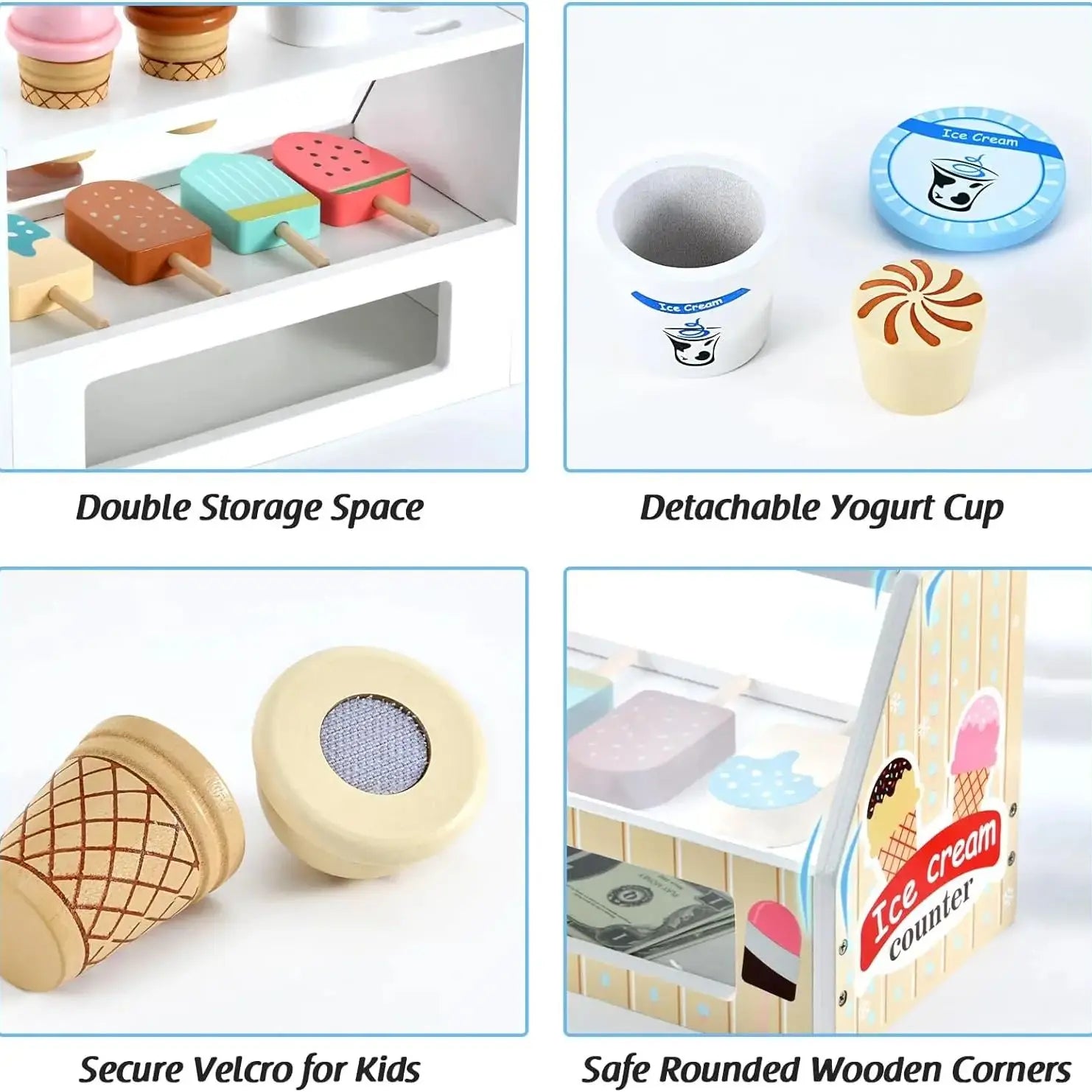
Top role play toys for early childhood development that hold attention longer See it in action
How to Choose the Right Pretend Play Toy
Selecting the right pretend play toy for a 4-year-old depends on your child’s interests, play style, available space, and developmental goals. The best choices are not always the biggest sets—they are toys that encourage children to create different stories and return to play again and again.
- Match the toy to your child’s interests: Children stay engaged longer when pretend play connects with things they already enjoy. A child who loves cooking may prefer a kitchen set, while a child who enjoys helping others may enjoy doctor or caregiver role play.
- Choose open-ended play experiences: Look for toys that allow multiple scenarios instead of only one fixed activity. Open-ended toys support creativity because children can decide the characters, story, and outcome.
- Check safety and materials: Choose age-appropriate toys made with durable materials, smooth edges, and accessories that are easy for preschoolers to handle safely. Avoid overly complex sets with unnecessary small pieces.
- Consider storage and durability: Pretend play toys should fit your home environment. Compact sets with organized accessories are easier to maintain and more likely to be used regularly.
For families exploring more pretend play ideas for 4 year olds , combining role play with sensory activities can create richer learning experiences. Adding items from Sensory Toys or Mobility & Training collections can enhance physical and sensory exploration during creative play.
Pretend Play Ideas to Extend Toy Value
A great pretend play toy can become dozens of different activities when children are encouraged to create new scenarios. Simple changes in roles, settings, and storytelling can help preschoolers stay interested without constantly needing new toys.
- Create daily role-play scenarios: Turn an ice cream shop into a birthday party service, a restaurant, or a pretend neighborhood store.
- Encourage sibling play: Assign different roles like customer, owner, helper, or storyteller to build cooperation and communication.
- Support independent play: Keep frequently used pretend toys accessible so children can start their own activities without adult direction.
- Build screen-free routines: Set aside regular pretend play time to give children an alternative to passive entertainment.
Rotating accessories, introducing new story ideas, and allowing children to lead the activity can increase the long-term value of pretend play for 4 year olds while supporting imagination and confidence.
Educational Value: Montessori, STEM, and Open-Ended Play
Many imaginative play toys for 4 year olds support early learning approaches such as Montessori-inspired play and STEM exploration. While pretend play is child-led, it naturally encourages skills that prepare children for future learning.
- Montessori compatibility: Realistic pretend toys allow children to practice practical life skills, independence, and decision-making through hands-on activities.
- STEM learning: Construction sets, tool benches, counting games, and shop play introduce early concepts like problem-solving, patterns, measurement, and organization.
- Imagination development: Open-ended toys encourage children to invent stories, experiment with ideas, and think creatively.
- Long-term engagement: Toys with multiple uses often remain interesting longer because children can change the rules and create new challenges.
The best imaginative play experiences balance learning and fun. Instead of telling children exactly how to play, quality pretend play toys give them the freedom to explore, create, and discover.
Which Pretend Play Toy Fits Your Child Best?
The best pretend play toys for 4 year olds depend on your child’s personality, learning goals, available space, and budget. A child who enjoys social interaction may prefer a shop or grocery setup, while a child who loves creativity may enjoy costumes, puppets, or storytelling activities.
- For outgoing children: Choose interactive role play toys like ice cream shops, grocery stores, or doctor kits that encourage conversations and shared play.
- For shy children: Start with comfortable solo activities such as puppet play, caregiver sets, or small-world pretend scenarios that allow confidence to grow gradually.
- For creative storytellers: Dress-up sets and open-ended toys provide unlimited opportunities for imagination and character development.
- For STEM-focused learners: Tool benches, building sets, and shop-themed toys introduce early problem-solving and practical skills.
- For small spaces: Choose compact pretend play sets with organized accessories that are easy to store and reuse.
When choosing pretend play toys for 4 year olds , focus on quality, flexibility, and how often your child can create new play experiences rather than simply choosing the largest toy set.
Frequently Asked Questions
What are the best pretend play toys for 4 year olds?
The best pretend play toys for 4 year olds are open-ended options that allow children to create stories and explore real-life roles. Popular choices include ice cream shop playsets, kitchen sets, doctor kits, grocery stores, dress-up costumes, and puppet theaters because they support creativity, communication, and problem-solving.
How do pretend play toys help language development?
Pretend play encourages children to create conversations, describe actions, and build stories. Activities like running a pretend store or caring for a toy patient help preschoolers practice new vocabulary, listening skills, and communication through natural role-playing.
What safety features should I look for?
Choose pretend play toys with age-appropriate designs, durable materials, smooth edges, and accessories that are easy for children to handle. For 4-year-olds, avoid overly complicated sets and make sure small pieces are stored safely when not in use.
Are Montessori pretend play toys worth buying?
Montessori-inspired pretend play toys can be valuable because they encourage independence, practical life skills, and hands-on learning. The most effective choices allow children to explore freely instead of limiting them to one specific way of playing.
What are the best pretend play toys for siblings ages 3 and 4?
For siblings, choose toys that support cooperation and multiple roles, such as kitchen sets, grocery stores, doctor kits, and shop playsets. These options allow children of different ages to participate together while practicing sharing and communication.
How many pretend play toys should a 4-year-old have?
A 4-year-old does not need a large number of pretend play toys. A few high-quality, open-ended toys are often enough because children can create many different scenarios from the same setup. Rotating toys and adding new storytelling ideas can keep play fresh without constantly buying more.
Which pretend play toy is best for shy children?
Shy children often benefit from pretend play toys that allow gradual confidence building, such as puppets, caregiver kits, or small role-play sets. These activities let children express ideas and emotions at their own pace before joining larger group play.
How do imaginative play toys help child development?
Imaginative play toys support cognitive, social, and emotional development by helping children solve problems, create stories, understand different perspectives, and practice real-world situations through play.
Are pretend play toys suitable for both boys and girls?
Yes. Pretend play toys are designed around children’s interests rather than gender. Any child can enjoy cooking, building, caring, storytelling, shopping, or creative role-play activities.
What is the difference between pretend play and imaginative play?
Pretend play usually involves acting out familiar roles or situations, such as being a chef, doctor, or shop owner. Imaginative play is broader and includes creating fictional worlds, characters, and stories that may not be based on everyday experiences.
How can I encourage pretend play at home?
Create a simple play area, provide open-ended toys, allow children to lead the story, and avoid correcting their ideas too quickly. Regular screen-free play opportunities help children develop creativity and independence naturally.
Pillar Article: Best Educational Toy Compared: Top Picks Worth It
Other Related Articles:
- Early Childhood Development Toys: What Actually Helps
- Ice Cream Play Sets Compared: Which One Is Worth Buying
- Educational Toys for 2 Year Olds: Which Ones Work Best
- Top Pretend Play Toys Compared: Which Sparks Creativity
Explore More:





