

Wooden Number Blocks: How to Choose the Right Set for Kids
Do wooden number blocks really work for early math learning?
Wooden number blocks help children develop early math learning skills by transforming abstract number concepts into hands-on experiences. As children touch, stack, count, sort, and compare blocks, they strengthen number recognition, one-to-one correspondence, sequencing, and early problem-solving. When paired with short, guided play sessions and plenty of repetition, wooden number blocks provide a screen-free, engaging way to build strong numeracy foundations before kindergarten.
Wooden number blocks: How to use for early math learning
⏱ 6 min read
Helping young children understand numbers isn't always easy. Many parents find worksheets or flashcards lose their child's attention quickly. Wooden number blocks offer a more natural approach by encouraging children to learn through touching, moving, counting, and exploring. Whether you're introducing your toddler to numbers or supporting preschool readiness, these simple educational toys make early math learning enjoyable and meaningful.
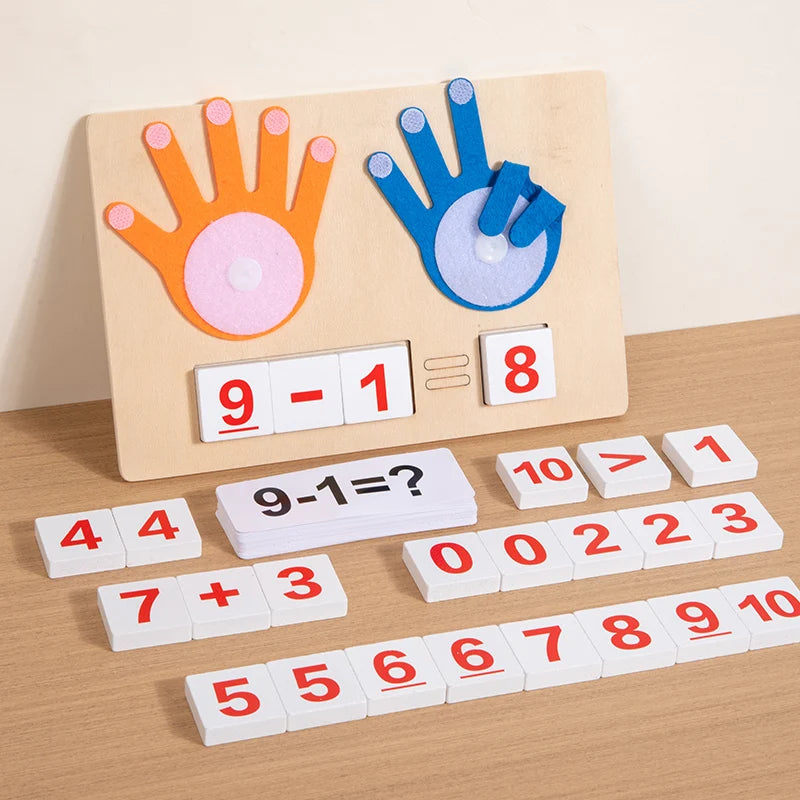
See it in action - wooden number blocks / how wooden math toys improve learning, educational wooden number blocks set, Montessori methods for early math learning
Explore engaging options in our Baby Growth & Learning collection.
How to use wooden number blocks step by step
Knowing how to use wooden number blocks effectively can help children build math skills gradually without feeling overwhelmed. Start with simple concepts, then introduce more challenging wooden number blocks activities as your child gains confidence. Short, playful sessions of 5–10 minutes are often more effective than longer lessons.
Counting basics
Begin by helping your child recognize individual numbers before introducing counting games.
-
Start with number recognition
Place blocks numbered 1–5 on a flat surface. Say each number clearly, encourage your child to repeat it aloud, and let them hold each block while matching the spoken number to the symbol. -
Practice counting through stacking
Invite your child to stack the blocks in numerical order while counting from one to five. This activity strengthens sequencing, counting accuracy, and hand-eye coordination. -
Match numbers with real objects
Pair each numbered block with the correct quantity of everyday items such as buttons, toy animals, or building blocks. Connecting numerals with physical quantities helps children understand what each number represents.
Addition and subtraction
Once counting becomes familiar, introduce simple operations using visual examples.
-
Practice simple addition
Place two blocks beside one additional block and ask, "How many blocks are there altogether?" Let your child move and count the blocks before answering. -
Introduce basic subtraction
Start with a small group of blocks, remove one, and ask how many remain. Seeing quantities change makes subtraction easier to understand than memorizing equations.
Pattern and sequencing activities
Wooden number blocks activities can also strengthen logical thinking beyond counting.
- Create simple number sequences such as 1-2-3-4 and let your child finish the pattern.
- Arrange blocks from smallest to largest or largest to smallest.
- Combine colors and numbers to build repeating patterns.
- Challenge your child to find the missing number in a sequence.
Independent practice ideas
As children become more comfortable, encourage open-ended exploration. They might build towers, create pretend stores, sort blocks into groups, or invent their own counting games. Independent play reinforces early math learning while developing creativity, confidence, and problem-solving skills at their own pace.
Browse curated tools in Sensory Toys designed for hands-on learning.
Benefits of wooden number blocks for toddlers and preschoolers
Educational wooden number blocks support much more than counting practice. Because children manipulate, sort, stack, and compare the pieces, they strengthen several foundational skills that prepare them for future math success and everyday problem-solving.
Cognitive and fine motor development
- ✅ Builds early number recognition and number sense
- ✅ Strengthens fine motor skills and hand-eye coordination
- ✅ Improves memory, concentration, and visual discrimination
- ✅ Encourages logical thinking through sorting and sequencing
- ✅ Supports school readiness by making early math concepts easier to understand
Montessori-inspired independent learning
Many educational wooden number blocks are inspired by Montessori principles, encouraging children to explore at their own pace instead of relying on memorization. Children naturally learn through repetition, self-correction, and hands-on discovery, helping build independence alongside numeracy skills.
Confidence through hands-on practice
Success with simple counting activities helps children develop confidence before moving on to more advanced concepts such as addition, subtraction, and pattern recognition. Parents often notice increased enthusiasm when learning feels like play rather than a formal lesson. As one parent shared:
"My 3-year-old went from avoiding numbers to asking for 'block time' every day."
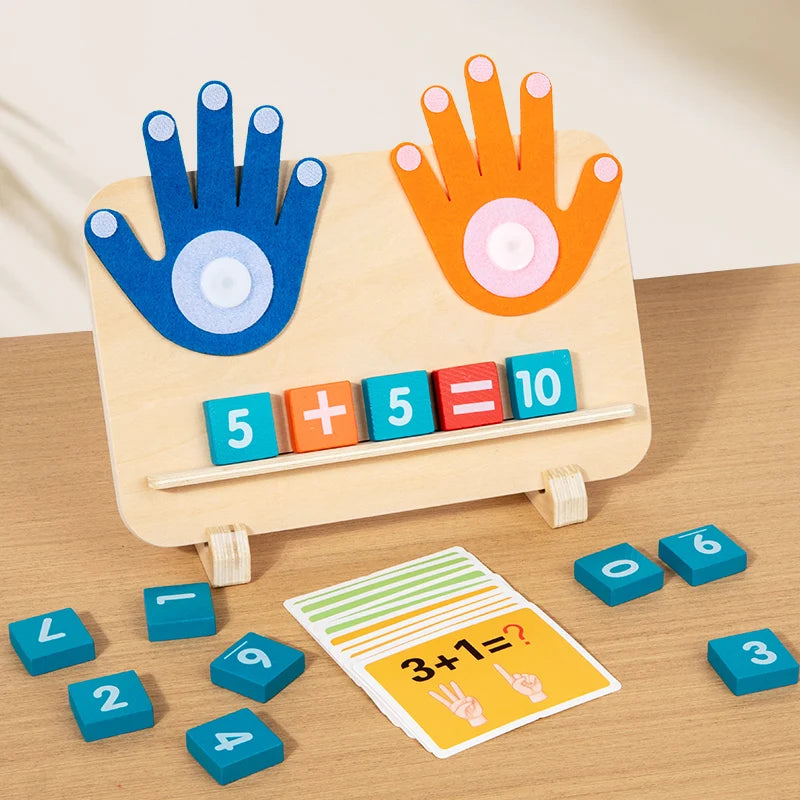
See it in action - wooden number blocks / how wooden math toys improve learning, educational wooden number blocks set, Montessori methods for early math learning
Wooden vs plastic math toys comparison
Both wooden and plastic math toys can teach counting, but the learning experience differs depending on the materials, design, and overall quality. The comparison below highlights the strengths of each option.
| Feature | Wooden Number Blocks | Plastic Math Toys |
|---|---|---|
| Durability | Excellent; withstands years of daily play | Moderate; may crack or wear over time |
| Sensory experience | Natural texture and satisfying weight encourage tactile learning | Smoother surface with less sensory feedback |
| Learning engagement | Promotes focused, hands-on exploration with fewer distractions | Often includes lights or sounds that may divert attention |
| Safety | Many sets use non-toxic wood and child-safe finishes | Quality varies depending on materials and manufacturer |
| Sustainability | Often made from renewable wood with long service life | Typically manufactured from petroleum-based plastics |
| Long-term value | Suitable for multiple developmental stages and siblings | Depends on build quality and intended age range |
For families seeking screen-free learning, wooden number blocks typically provide a calmer, distraction-free environment while offering excellent durability and long-term educational value.
For additional ideas on supporting your child's development beyond math activities, explore Baby Care Tips & Advice.
Common mistakes when buying and using wooden number blocks
Choosing quality wooden number blocks and using them appropriately helps children stay engaged while building lasting math skills. Avoid these common mistakes to create a positive learning experience.
Choosing the wrong age level
- ❌ Selecting sets with numbers or activities that are too advanced
- ❌ Giving toddlers pieces that are too small for safe play
- ❌ Expecting children to master large number ranges immediately
Start with simple counting from 1–5 or 1–10, then gradually increase the difficulty as your child's confidence grows.
Ignoring material quality
- ❌ Buying toys made with questionable finishes or rough edges
- ❌ Overlooking non-toxic paints and child-safe construction
- ❌ Choosing products that chip or wear quickly
Look for smooth, durable wooden number blocks with rounded corners and child-safe, non-toxic finishes that can withstand years of regular use.
Using activities that are too advanced
- ❌ Forcing structured lessons before children are ready
- ❌ Expecting immediate progress
- ❌ Introducing too many concepts in one session
- ❌ Limiting opportunities for free exploration and creative play
Keep learning enjoyable by following your child's pace. Curiosity and repeated practice build stronger mathematical understanding than pressure or lengthy lessons.
If your child loses interest, rotating educational activities alongside toys from Mobility & Training can help keep playtime fresh and engaging.
Why wooden number blocks are a smart investment for early learning
High-quality wooden number blocks offer long-term educational value by supporting number recognition, counting, sequencing, fine motor development, and independent problem-solving throughout the preschool years. Unlike worksheets or many digital activities, they encourage active participation through touch, movement, and exploration.
Parents looking for a versatile educational toy can choose a set that grows with their child's abilities, from simple counting games to early addition, subtraction, and pattern-building activities. Their durability also makes them an excellent choice for siblings, classrooms, or long-term home learning.
Ready to support your child's early math journey? Start with the wooden finger counting toy and encourage confident, hands-on learning through everyday play.
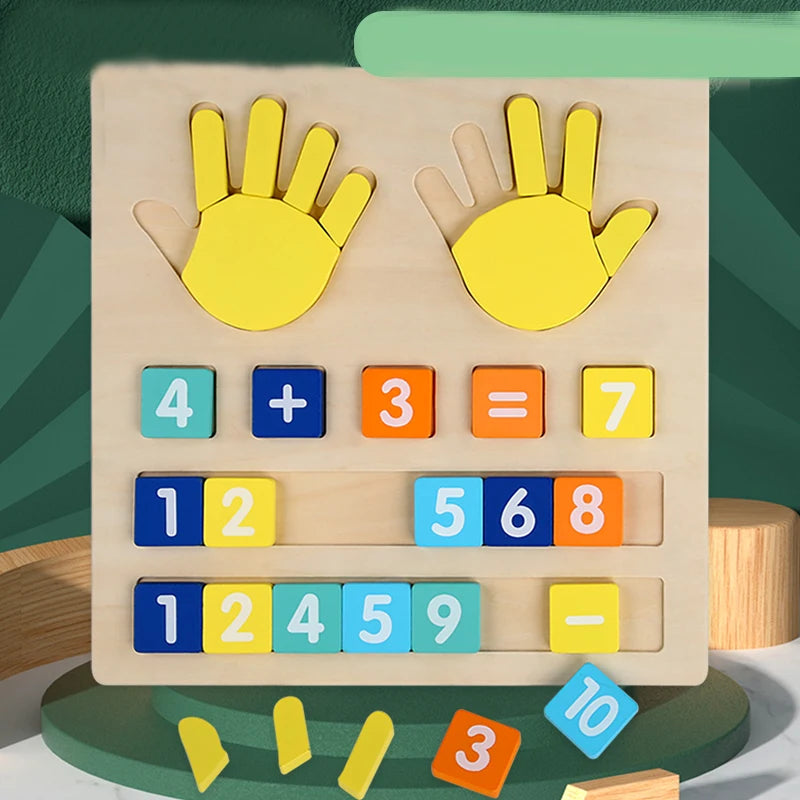
See it in action - wooden number blocks / how wooden math toys improve learning, educational wooden number blocks set, Montessori methods for early math learning
Make learning fun today with the wooden finger counting toy.
Frequently asked questions
What are wooden number blocks used for?
Wooden number blocks help children develop early numeracy skills through counting, number recognition, sequencing, sorting, simple arithmetic, and hands-on problem-solving activities.
How do wooden number blocks help early math learning?
They make abstract math concepts concrete by allowing children to touch, move, compare, and count physical objects. This multi-sensory approach improves understanding, memory, and engagement.
What age is best for wooden number blocks?
Most children can begin using wooden number blocks between ages 2 and 3 with simple counting activities. Preschoolers can gradually progress to addition, subtraction, and pattern recognition.
Are wooden number blocks safe for toddlers?
Yes. Choose wooden number blocks designed for toddlers with smooth edges, large pieces that reduce choking risks, and non-toxic paints or finishes that comply with recognized toy safety standards.
What certifications should wooden toys have?
Look for products that meet recognized toy safety standards in your region and clearly state that they use non-toxic, child-safe paints and finishes.
How do Montessori number blocks differ from regular blocks?
Montessori number blocks emphasize self-directed, hands-on exploration and learning through discovery, while many traditional counting blocks are designed for more teacher- or parent-led instruction.
Are Montessori number blocks worth buying?
They can be an excellent investment for families who value independent, play-based learning. Many children remain engaged with Montessori-style materials across multiple developmental stages.
How do I choose the right wooden number block set?
Consider your child's age, block size, durability, smooth finish, non-toxic materials, storage options, and whether the set supports progressively more challenging math activities.
How do I clean and maintain wooden number blocks?
Wipe blocks with a soft, damp cloth and mild soap when needed. Dry them immediately, avoid soaking them in water, and store them in a cool, dry place to help preserve the wood and finish.
Pillar Article: Math hands on activities for preschoolers: Easy step-by-step guide
Other Related Articles:
- Kindergarten number recognition activities: Daily practice guide
- Number recognition activities for preschool: How to teach fast
- Preschool number recognition activities: Easy home teaching guide
Explore More:





