

How can clinicians improve auscultation clarity in noisy settings?
How to improve auscultation clarity depends on reducing background noise, improving signal amplification, and refining listening technique. In noisy clinical auscultation environments, intelligent noise reduction and an amplified stethoscope help isolate heart and lung sounds, overcoming poor stethoscope sound quality so clinicians can hear subtle diagnostic cues more accurately.
How to Improve Auscultation Clarity in Noisy Settings
⏱ 8 min read
How to improve auscultation clarity is a challenge many clinicians face during busy shifts. Crowded wards, alarms, conversations, and equipment hum can turn a simple exam into a guessing game. If you have ever strained to hear faint heart murmurs or subtle lung crackles, you are not alone. The good news is that small, practical changes can dramatically improve what you hear.
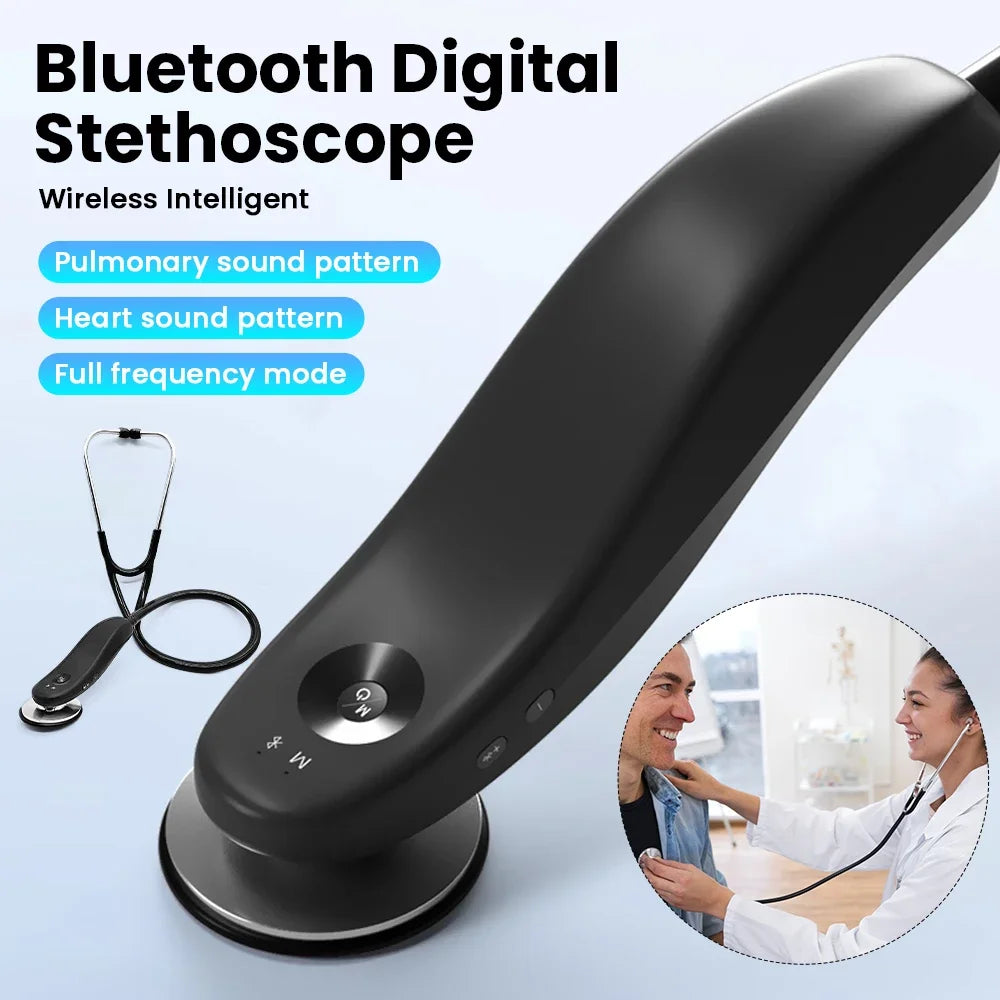
Clearer listening starts here: how to improve auscultation clarity even during noisy clinical auscultation 💡 See it in action
Why Noise Makes Auscultation Harder Than It Should Be
Noisy clinical auscultation is more than an annoyance. Background sounds compete directly with low-frequency heart tones and subtle respiratory noises. Over time, this can lead to missed findings, longer exam times, and reduced confidence during patient assessments.
Common sources of interference include:
- Overhead alarms and monitors
- Nearby conversations and foot traffic
- HVAC systems and equipment vibration
- Thin tubing or aging stethoscope components
How to Improve Auscultation Clarity Step by Step
How to improve auscultation clarity starts with controlling what you can. By combining environmental awareness, better equipment, and refined technique, clinicians can dramatically reduce listening fatigue and increase diagnostic accuracy.
- Position yourself to block ambient noise when possible.
- Ensure proper chest piece contact and seal.
- Use amplification to enhance low-volume sounds.
- Apply intelligent noise reduction to filter distractions.
Clinicians working in pediatrics, family medicine, and inpatient wards often find that these steps shorten exam time while improving confidence, especially during back-to-back assessments.
How Intelligent Noise Reduction Changes What You Hear
How to improve auscultation clarity becomes much easier when technology assists your ears. Intelligent noise reduction analyzes incoming sound and suppresses irrelevant background noise, allowing heart and lung sounds to stand out clearly.
This approach is especially helpful when traditional scopes struggle with poor stethoscope sound quality. An amplified stethoscope with noise filtering can boost faint signals up to several times their natural volume without distortion.
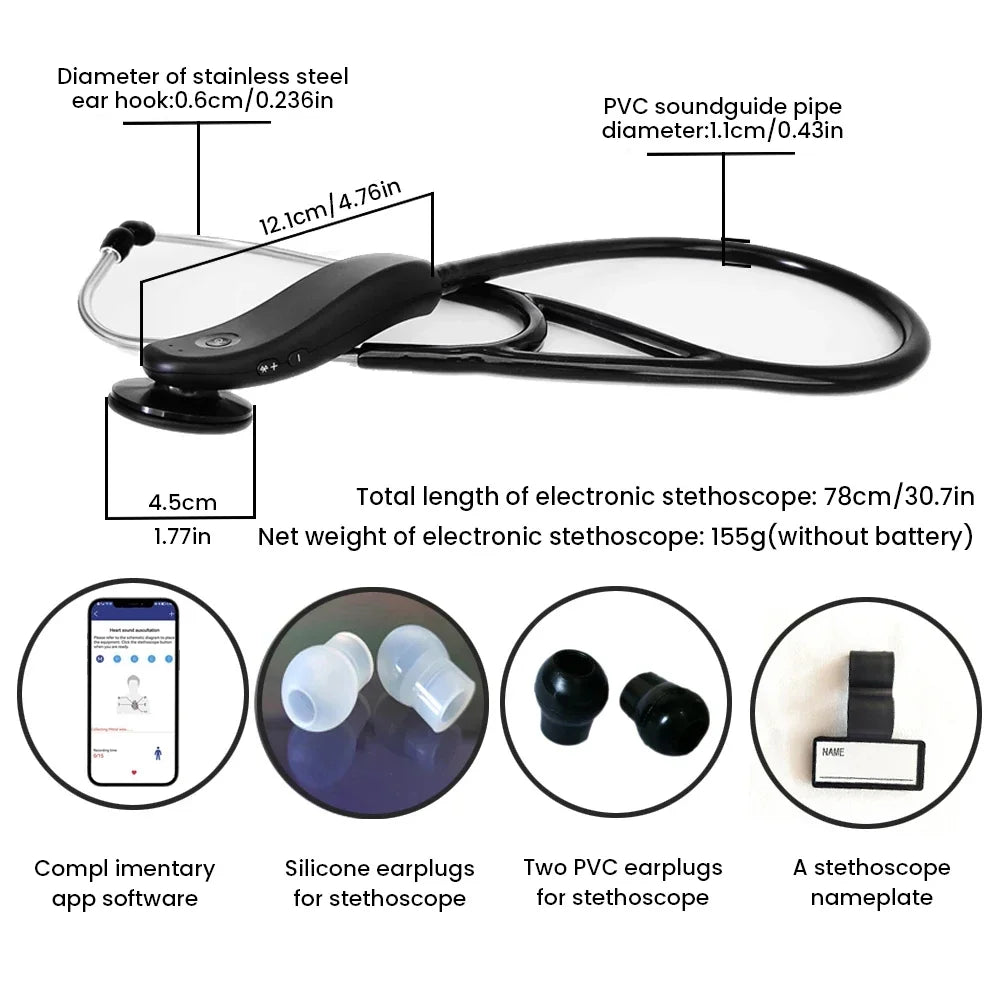
Amplified listening in action: intelligent noise reduction for noisy clinical auscultation 💡 See it in action
Clinicians who also use digital monitoring tools often explore related solutions in Monitoring Devices to create a more reliable diagnostic workflow.
Listening Techniques That Improve Accuracy Even More
Technology helps, but technique still matters. How to improve auscultation clarity also depends on how you listen. Small adjustments can make a big difference.
- Warm the diaphragm to reduce patient tension and movement.
- Ask patients to pause breathing briefly for heart sounds.
- Listen systematically, comparing bilateral lung fields.
- Repeat questionable findings before moving on.
These habits, combined with amplification, reduce second-guessing and help clinicians trust what they hear.
What Clinicians Notice After Improving Auscultation Clarity
After addressing noisy clinical auscultation challenges, many clinicians report immediate differences. Sounds feel closer, clearer, and easier to interpret. Subtle murmurs and fine crackles become more distinct, even during peak ward activity.
Some also note reduced listening fatigue and faster exams, which is critical during long shifts. For those balancing work and family wellness routines, related solutions in Health & Safety and Beauty & Wellness support overall daily comfort and focus.
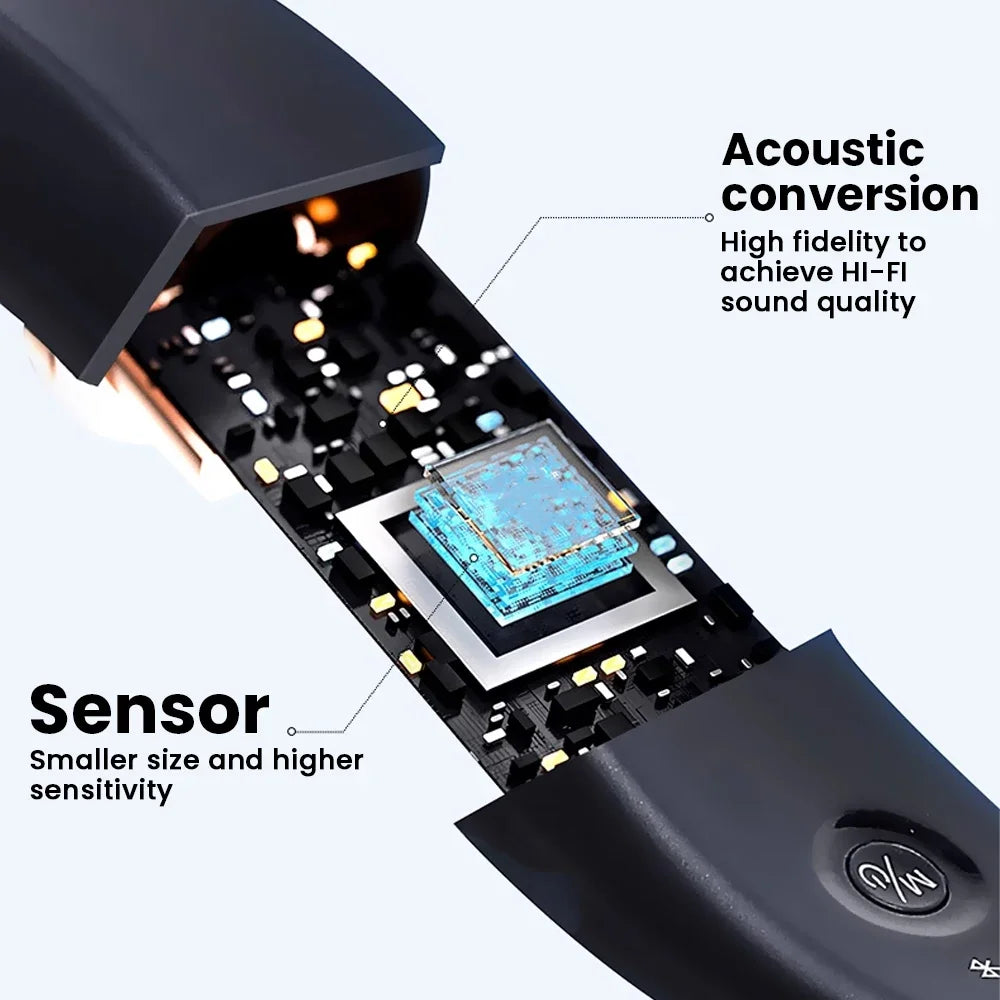
From muffled to meaningful: how to improve auscultation clarity with the right tools 💡 See it in action
Ready to hear the difference? Explore how an amplified stethoscope with intelligent noise reduction can change your next exam: learn more here.
Frequently Asked Questions
Why does my stethoscope sound muffled in busy wards?
Poor stethoscope sound quality often results from thin tubing, worn components, and overwhelming background noise. In noisy clinical auscultation settings, unamplified scopes struggle to isolate low-frequency heart and lung sounds.
Does amplification really help improve auscultation clarity?
Yes. Amplification increases signal strength, making subtle sounds easier to detect. When paired with intelligent noise reduction, it helps clinicians focus on diagnostic sounds instead of environmental distractions.
Is improving auscultation clarity only about buying new equipment?
No. How to improve auscultation clarity also involves positioning, patient instruction, and systematic listening. Better tools simply make these techniques more effective and consistent.
Pillar Article: Not Found
Other Related Articles:
- Difficulty Hearing Heart Murmurs? Step-by-Step Guide
- Cardiac Auscultation Sound Amplification: How to Use It
- Digital Auscultation Best Practices for Clear Results
- Electronic Stethoscope Noise Reduction: Top Models Compared
Explore More:





