

Kids Number Recognition Activities Preschool: 25 Fun Ideas
What Are Kids Number Recognition Activities for Preschool?
Kids number recognition activities for preschool help children connect written numerals with spoken number names and actual quantities. Number recognition is more than memorizing what a numeral looks like: children gradually learn that the symbol 3 represents the word “three” and a group of three objects. These connections support early number sense and give preschoolers a practical foundation for later counting, comparing, and arithmetic.
Preschool Number Recognition Activities: 15 Fun Ways to Teach Number Identification
⏱ 8 min read — Preschool number recognition activities can make early math practice feel like play instead of a formal lesson. If your child can count aloud but still struggles to identify written numbers, start with small number ranges, connect numerals to real objects, and repeat short activities regularly. The goal is steady understanding—not perfect recognition all at once.
Want to help your child recognize numbers with less frustration? Use short, hands-on activities that connect each numeral to something your child can see, touch, count, and use.
Discover playful ways to build your child’s number recognition skills
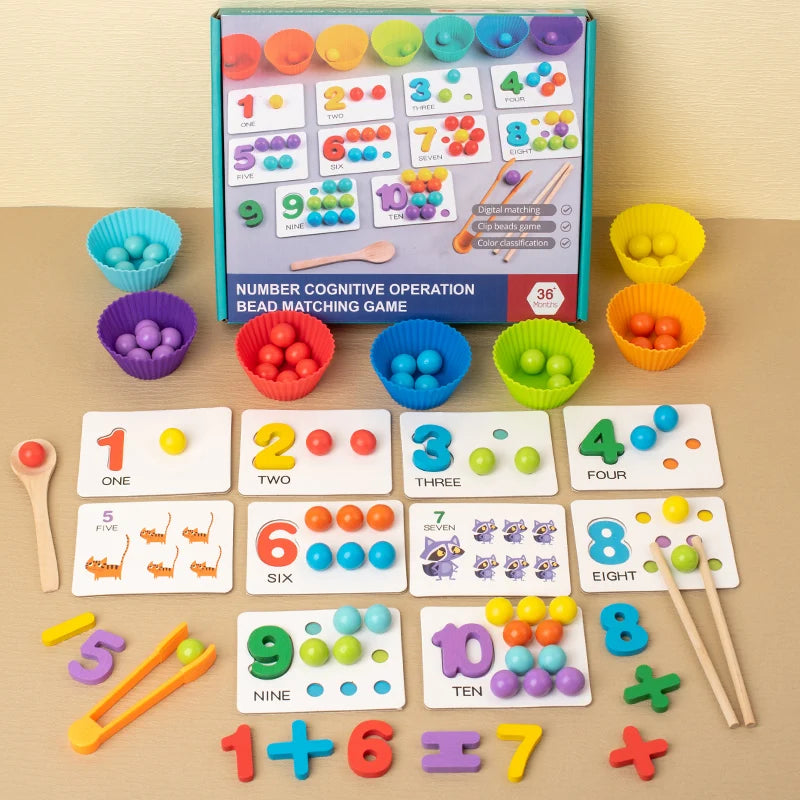
See it in action - preschool number recognition activities / interactive math learning tools for parents, early arithmetic learning games for kids, children confused by abstract number concepts, step by step preschool math teaching guide
What Are Kids Number Recognition Activities for Preschool?
Number recognition preschool activities teach children to identify written numerals and connect them with the numbers they hear and the quantities they count. For example, a child learning the numeral 4 might say “four,” point to the written 4, and then count four blocks.
This connection matters because counting and numeral recognition are related but different skills . A preschooler may successfully recite “1, 2, 3, 4, 5” without being able to identify the written numeral 4 when it appears on a card or sign.
Effective preschool number recognition activities give children repeated opportunities to:
- Look at and name familiar numerals.
- Hear number words while seeing their written symbols.
- Match numerals with groups of objects.
- Recognize numbers in different fonts, sizes, and everyday settings.
- Practice without feeling pressured to perform perfectly.
Readiness varies from child to child, so avoid treating a particular age as a strict deadline. Instead, introduce a manageable number range and gradually increase the challenge as recognition becomes more consistent.
Hands-on learning can be supported with resources from Sensory Toys and Baby Growth & Learning , particularly when a child responds better to physical exploration than repeated worksheets.
What Numbers Should Preschoolers Learn First?
When teaching number recognition to preschoolers, begin with a small group of numerals rather than introducing every number at once. A simple progression helps children build recognition while continuing to connect symbols with quantities.
Start With Numbers 1–5
Numbers 1–5 are a practical starting point because they can be represented easily with everyday objects. Show one object beside the numeral 1, two objects beside 2, and so on.
For example, place three blocks next to a card showing 3 . Ask your child to count the blocks, then name the numeral. This reinforces the relationship between the symbol, spoken number, and quantity.
Expand From 1–5 to 1–10
Once a child recognizes several numerals from 1–5 consistently, gradually introduce numbers 6–10. There is no need to rush through the entire range.
Keep familiar numbers in the activity while adding one new numeral. This gives children opportunities to practice recognition while still experiencing success with symbols they already know.
Connect Numerals, Number Words, and Quantities
Do not rely only on flashcard memorization. Whenever possible, use a three-part connection:
- Numeral: Show the written number.
- Number word: Say the number aloud.
- Quantity: Count the matching number of objects.
For example, show 5 , say “five,” and count five toy cars together. This approach gives children a more meaningful understanding of number identification preschool concepts.
15 Kids Number Recognition Activities for Preschool
These number recognition activities for preschoolers use simple materials and short instructions. Choose a few activities that match your child’s current ability instead of trying to complete all 15 in one session.
Movement and Active Number Games
1. Number Hop
Materials: Paper cards or sticky notes with numbers 1–5.
How to play: Place the numeral cards on the floor. Call out a number and ask your child to hop to the matching numeral. After landing, have them say the number and count that many claps or jumps.
Skill practiced: Visual numeral recognition, listening, and number-symbol recall.
2. Number Treasure Hunt
Materials: Number cards and safe household objects.
How to play: Hide several numeral cards around a room. Give your child one target number at a time and ask them to find it. Once found, count a matching number of objects together.
Skill practiced: Number identification and connecting numerals with quantities.
3. Number Movement Challenge
Materials: Number cards.
How to play: Hold up a numeral and assign a movement to it. For example, 2 means two jumps and 4 means four claps. Change the cards frequently and let your child call out the next number.
Skill practiced: Numeral recognition, recall, and quantity awareness.
4. Number Parking Lot
Materials: Toy cars and paper numbered 1–5 or 1–10.
How to play: Create numbered parking spaces. Ask your child to park a car in the space you name. Then count cars in selected spaces together.
Skill practiced: Recognizing numerals in a playful real-world context.
Matching and Sorting Activities
5. Number Card Match
Materials: Two sets of simple number cards.
How to play: Place one set face up and mix the second set. Ask your child to find the matching numeral. Start with 1–5 and add more numbers as recognition improves.
Skill practiced: Visual discrimination and number identification.
6. Sort the Number Cards
Materials: Number cards and small containers.
How to play: Label containers with familiar numerals. Give your child a mixed pile of cards and ask them to sort each card into the correct container.
Skill practiced: Numeral recognition and classification.
7. Number and Object Match
Materials: Number cards and small toys, blocks, or household objects.
How to play: Put a numeral card on the table. Ask your child to build a group containing the same number of objects. Count aloud together before moving to another card.
Skill practiced: Numeral-to-quantity matching and one-to-one counting.
8. Number Sorting by Quantity
Materials: Number cards and several groups of objects.
How to play: Create groups containing different quantities. Ask your child to place the correct numeral beside each group. Keep quantities small while introducing the activity.
Skill practiced: Connecting written numerals with counted quantities.
Sensory and Fine-Motor Activities
9. Trace Numbers in Sensory Materials
Materials: A tray with sand, salt, rice, or another age-appropriate sensory material.
How to play: Write a large numeral in the tray and invite your child to trace it with a finger. Say the number aloud as they trace it. Start with familiar numerals.
Skill practiced: Visual numeral recognition, tactile exploration, and fine-motor control.
10. Build Numbers With Loose Parts
Materials: Blocks, craft sticks, pipe cleaners, or other safe loose parts.
How to play: Show a large numeral and help your child recreate its shape with the materials. Name the number while building it.
Skill practiced: Recognizing numeral shapes and developing fine-motor coordination.
11. Make and Match Number Cards
Materials: Cardstock, markers, and small stickers or dots.
How to play: Make simple numeral cards together. Add the corresponding number of dots to separate cards, then ask your child to match each numeral with the correct dot card.
Skill practiced: Numeral recognition and quantity matching.
12. Count and Clip the Correct Number
Materials: Number cards, pictures or objects, and child-safe clips.
How to play: Put a group of objects on a card. Offer several numeral choices and ask your child to clip the numeral that represents the quantity.
Skill practiced: Counting, numeral identification, and fine-motor coordination.
Outdoor and Everyday Number Activities
13. Number Walk
Materials: None.
How to play: During a walk, look for numbers on signs, doors, addresses, or other everyday objects. Ask your child to identify familiar numerals without turning the walk into a formal lesson.
Skill practiced: Recognizing numbers in real-life contexts.
14. Snack Number Game
Materials: Small portions of an appropriate snack.
How to play: Put a small number card beside a portion of food. Count the pieces together and ask which numeral represents the amount. Adjust the quantity to match the numbers your child is practicing.
Skill practiced: Numeral-to-quantity recognition in an everyday routine.
15. Number Block Tower
Materials: Building blocks and number cards.
How to play: Choose a numeral and build a tower with that many blocks. Ask your child to identify the card before building and count the blocks afterward.
Skill practiced: Number recognition, counting, and quantity representation.
Make early math practice hands-on, repeatable, and easy to fit into everyday play.
Easy No-Prep Number Recognition Games
You do not need printed worksheets or elaborate materials to practice number recognition games preschool learners can enjoy. Household objects, movement, and observation can provide enough practice for a short session.
Number Hunt
Choose one familiar numeral and look for it around the house. Check books, packaging, clocks, labels, or other appropriate objects. Each time your child spots the target number, ask them to name it.
Show Me the Number
Write several familiar numbers on scraps of paper or use numbers already available around you. Say a number and ask your child to point to it. Reverse the game by pointing to a numeral and asking your child to name it.
Number Movement Game
Call out a number and have your child perform that many movements, such as claps, jumps, or steps. Keep the numbers within the range your child is currently learning.
Number Matching From Memory
Place pairs of familiar numeral cards face down. Let your child turn over two cards at a time and look for matching numerals. Begin with only a few pairs to prevent the game from becoming frustrating.
These number recognition activities for preschoolers work especially well when repeated for only a few minutes at a time. The objective is frequent exposure, not completing a fixed number of rounds.
Sensory and Fine-Motor Number Recognition Activities
Some children engage more readily when number identification includes touch and movement. Sensory and fine-motor activities can add another way to explore numeral shapes while keeping the learning experience active.
Try tracing numbers in sensory materials, constructing numeral shapes with loose parts, creating matching cards, or using clips to select the correct numeral. These formats can be reused with different numbers as the child progresses.
Hands-on resources from Sensory Toys can complement these activities, but the materials do not need to be specialized. The key is to keep the numeral visible and give the child an opportunity to interact with it.
Matching Numerals to Quantities
Matching written numerals to quantities is one of the most useful number recognition preschool activities because it moves learning beyond simply naming symbols. Children practice identifying a numeral while also understanding what that numeral represents.
Numeral-to-Object Matching
Place a numeral card next to a group of objects. Ask your child to count the objects and decide whether the numeral matches the group. Start with small quantities and familiar objects.
Number-to-Dot Matching
Create cards showing numerals and separate cards showing groups of dots. Mix them together and ask your child to find the pairs. This provides a simple bridge between concrete objects and visual representations.
Ten-Frame Number Matching
For children who are ready for a more structured representation, use a simple ten-frame. Show a numeral and ask the child to fill the corresponding number of spaces with counters or other safe manipulatives.
Progress from real objects to dots and then to structured visual representations as your child becomes more comfortable. Continue counting aloud when needed so numeral identification stays connected to quantity.
Printable and Reusable Number Recognition Activities
Printables can reinforce preschool number recognition activities, but they work best as one part of a broader hands-on routine rather than the only learning method.
Number Tracing and Matching
Use a simple page that shows a large numeral alongside objects representing that quantity. Let your child trace the numeral, say its name, and match it to the corresponding group.
Number Bingo
Create a small bingo grid using only the numerals your child is learning. Call out one number at a time and have your child cover the matching numeral. To add number sense, occasionally ask the child to count a matching group of objects before covering the square.
Reusable Number Sorts
Place numerals into reusable pockets, envelopes, or containers. Give your child cards showing quantities and ask them to sort each card under the correct numeral. Lamination or reusable sleeves can make the activity easier to repeat.
Keep printable practice short and interactive. If your child becomes frustrated, switch to movement, objects, or another hands-on activity and return to the printable later.
How to Adapt Number Recognition Activities by Age
Number recognition activities for toddlers and preschoolers should not all look the same. The appropriate challenge depends on the child’s current skills, attention, and familiarity with numerals.
Activities for Younger Preschoolers
Start with a small number range, often 1–3 or 1–5 depending on readiness. Use large, clear numerals and pair them with real objects. Focus on identifying a number, saying its name, and counting a matching quantity.
Short games such as number hunts, object matching, and movement activities can provide repeated practice without requiring a long lesson.
Activities for Older Preschoolers
Children who recognize several numerals consistently can work toward 1–10 and use more complex matching activities. Introduce ten-frames, memory games, number sorting, and numerals encountered in everyday environments.
You can also ask questions such as “Which number matches these six blocks?” rather than only asking the child to name a numeral.
When a Child Needs Extra Practice
If recognition is inconsistent, reduce the number of choices and return to familiar quantities. For example, instead of presenting cards from 1–10, practice only three or four familiar numerals.
Change the activity format while keeping the learning target the same. A child who resists flashcards may respond better to hopping, building, sorting, or searching for numbers during a walk. Repetition should provide additional opportunities rather than pressure.
Common Mistakes When Teaching Number Recognition
Teaching number recognition to preschoolers is more effective when practice focuses on understanding rather than speed or memorization. Watch for these common problems:
- Relying only on flashcards: Flashcards can provide recognition practice, but children also need opportunities to connect numerals with quantities and real situations.
- Skipping the numeral-to-quantity connection: Naming “5” is different from understanding that 5 represents a group of five objects.
- Introducing too many numbers at once: A smaller range gives children more opportunities to recognize familiar numerals successfully.
- Expecting recognition without repeated practice: Children may need to encounter the same numeral across games, routines, and different visual formats.
- Turning practice into a test: Frequent correction or pressure can reduce engagement. Offer prompts and another opportunity instead.
A useful approach is to keep the learning target narrow: identify a few numerals, connect them to quantities, and revisit them in different playful situations.
Preschool Number Recognition Progress Checklist
Use this checklist to observe progress without treating it as a strict developmental test. Children can develop these skills at different rates.
- ☐ Recognizes some familiar numerals when shown.
- ☐ Names familiar numerals aloud.
- ☐ Matches a numeral with a corresponding quantity.
- ☐ Counts objects while identifying the matching numeral.
- ☐ Recognizes familiar numbers in everyday settings.
- ☐ Distinguishes between several different numerals.
- ☐ Progresses from practicing 1–5 toward recognizing 1–10.
- ☐ Can use number recognition during simple games or routines.
If one skill is inconsistent, continue practicing it through different activities rather than moving immediately to a larger number range. Progress can be gradual, and repeated exposure helps children build confidence.
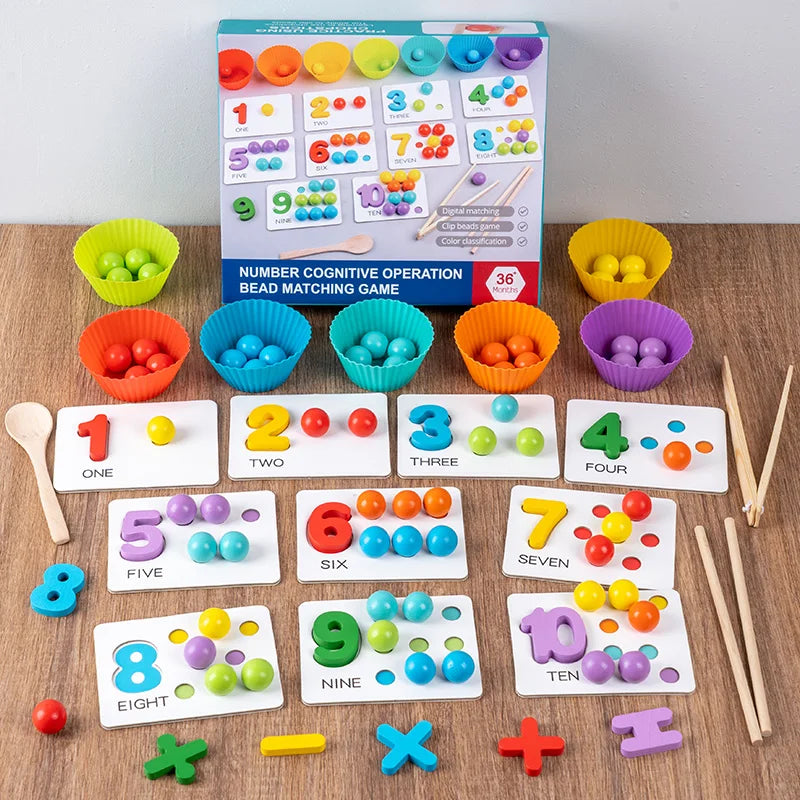
See it in action - preschool number recognition activities / interactive math learning tools for parents, early arithmetic learning games for kids, children confused by abstract number concepts, step by step preschool math teaching guide
Interactive Math Learning Tools That Make It Easier
Hands-on tools can make number identification easier to practice because children can see, touch, move, and organize learning materials. The best choice is one that supports the specific skill you are practicing rather than simply adding more toys.
For example, the Children Math Teaching Aids Montessori Wooden Set can provide a physical format for exploring numerals, quantities, matching, and early counting concepts.
- ✔ Provides visual number recognition practice
- ✔ Adds a tactile element to early math learning
- ✔ Supports repeated matching and counting activities
- ✔ Can encourage independent exploration alongside guided practice
Use a learning tool as part of an activity rather than expecting the material itself to teach number recognition. Show a numeral, count the corresponding objects, ask your child to match them, and repeat with different examples.
Additional resources from Feeding Tools can provide everyday counting opportunities, while Sensory Toys can complement tactile learning activities.
Turn Everyday Moments Into Number Recognition Practice
Number learning does not have to happen only during a planned activity. Everyday routines give preschoolers natural opportunities to see numbers and connect them with quantities.
During Meals
- Count pieces of food together.
- Ask how many pieces are left.
- Show a numeral and count that many suitable items.
During Playtime
- Count blocks while building a tower.
- Match toy groups with number cards.
- Sort objects according to numbered containers.
During Walks
- Spot familiar numerals on signs and doors.
- Count steps or other visible objects.
- Ask your child to identify numbers they already know.
Resources from Mobility & Training or Smart Baby Gadgets may also fit into broader play routines, but dedicated math practice should remain focused on the recognition skill you want to reinforce.
See it in action - preschool number recognition activities / interactive math learning tools for parents, early arithmetic learning games for kids, children confused by abstract number concepts, step by step preschool math teaching guide
FAQs About Preschool Number Recognition
How do you teach number recognition to preschoolers?
Start with a small group of numerals and connect each written number with its spoken name and a matching quantity. Use short games such as number hunts, matching, movement activities, object counting, and sensory tracing. Repeat familiar numbers regularly before expanding the range.
What numbers should a preschooler recognize?
There is no single strict timeline for every child. Many preschool learning activities begin with numbers 1–5 and gradually expand toward 1–10 as recognition becomes more consistent. Focus on understanding and readiness rather than rushing through a particular number range.
How can I make number recognition fun?
Turn practice into movement, searching, building, sorting, or pretend play. Number hunts, hopping to numerals, building towers, matching cards, and counting everyday objects can make number recognition feel like play rather than a worksheet exercise.
What is the difference between number recognition and counting?
Counting involves saying numbers in sequence and assigning number words to objects. Number recognition involves identifying written numerals. A child may be able to count to 10 while still learning to recognize the written symbols for those numbers.
When should children recognize numbers 1–10?
Children develop number recognition at different rates. Rather than using a strict deadline, watch whether your child is gradually recognizing familiar numerals, naming them, and matching them with quantities. If 1–5 is still developing, continue practicing that range before adding more numbers.

See it in action - preschool number recognition activities / interactive math learning tools for parents, early arithmetic learning games for kids, children confused by abstract number concepts, step by step preschool math teaching guide
Build number recognition through short, playful practice that fits naturally into your child’s day.
Related Articles:
- What is hands on learning: How to apply it in preschool math
- Preschool manipulatives toys: How to use them step by step
- Interactive math tools: How to use them for fast learning at home
- Hands on math activities for kindergarten: Easy daily routine guide
Pillar Articles:





